
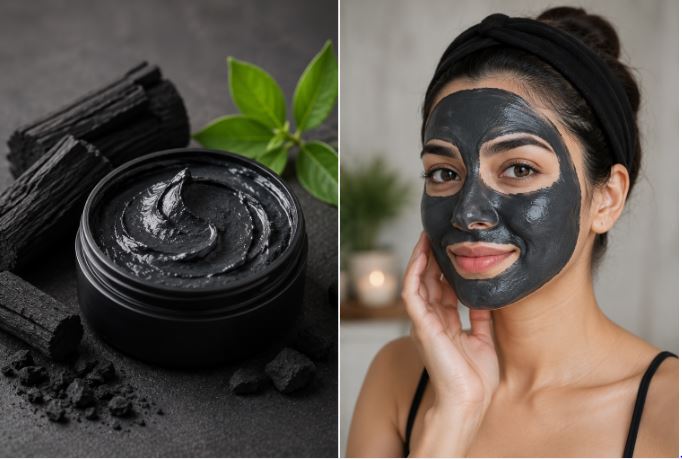
By 2 p.m., your T-zone looks like you’ve applied a fresh coat of highlighter you never asked for. If you’ve spent years chasing mattifying products and blotting sheets, you’ve probably already come across charcoal in one form or another. It’s everywhere in oily-skin skincare right now, and for once, the hype has some real logic behind it.
A charcoal face mask for oily skin is built around one simple mechanism: activated charcoal is highly porous, so it has a large surface area to bind with oil, dirt, and debris sitting on your skin. That’s different from a moisturizer or serum that adds something to your skin. A charcoal mask’s whole job is to pull things off it.
This guide compares charcoal against the other detox and exfoliating options you’ve probably seen, so you can decide if it deserves a spot in your routine, and how to use it without overdoing it.
Why Oily Skin Needs a Different Approach
Oily skin isn’t a flaw to fix, it’s a skin type with its own logic. Sebaceous glands produce more oil than a dry or normal skin type, often due to genetics, hormones, humidity, or a stripped moisture barrier overcompensating. The instinct to scrub harder or wash more often usually backfires, since over-cleansing signals the skin to produce even more oil to protect itself.
What actually helps is a routine that manages oil without stripping the skin bare: a gentle cleanser, lightweight hydration, and a weekly reset step that clears out what’s built up in the pores. That reset step is where a mask, charcoal or otherwise, earns its place.
Charcoal Face Mask for Oily Skin: What It Actually Does
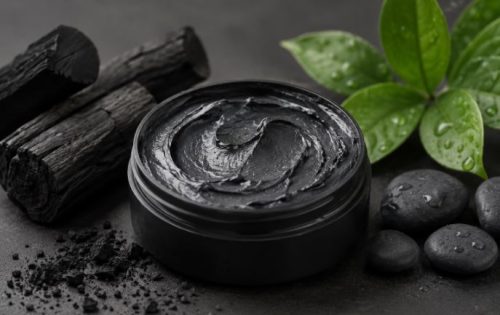
Activated charcoal is regular charcoal that’s been treated with heat or steam to increase its surface area dramatically, which is what gives it strong adsorbent properties. On the skin, that translates into pulling excess sebum, sweat, and surface debris out of open pores as the mask dries and tightens.
Worth knowing upfront: clinical research on charcoal specifically for skin is still limited, and much of what we know comes from its well-documented use for absorbing substances in the gut, not formal skin studies. That doesn’t mean it doesn’t work; it means the honest answer is that it’s a reasonable, generally low-risk ingredient with real mechanical logic, not a miracle fix.
For oily and combination skin, that’s usually enough. A charcoal mask, used correctly, can leave skin visibly less shiny and pores looking clearer within a single use, even if the long-term claims around anti-aging or deep detoxification are more marketing than proven science.
If oily or acne-prone skin needs more than a weekly mask, these structured skin programs look at the deeper causes behind excess oil and breakouts
Activated Charcoal Skincare vs Clay, Salicylic Acid, and Peel-Offs
| Option | Best For | Trade-Off |
| Activated charcoal mask | Oil absorption, visible pore clearing | Can be drying if overused |
| Clay mask (Multani Mitti, kaolin) | Matte finish, gentle oil control | Less effective on stubborn blackheads |
| Salicylic acid (BHA) | Deep pore exfoliation, active acne | Not ideal alongside other actives same day |
| Peel-off charcoal masks | Instant blackhead removal | Can strip healthy oils and irritate skin |
Most activated charcoal skincare products fall into two camps: rinse-off masks and peel-off masks. Rinse-off versions, usually blended with clay, tend to be gentler and more sustainable for regular use. Peel-off versions give a satisfying, visible result but can pull at healthy skin along with the debris, which isn’t ideal for sensitive or already-dry patches of oily-combination skin.
Compared to salicylic acid, charcoal works mechanically rather than chemically. It doesn’t dissolve oil the way a BHA does, it binds to what’s already sitting on the surface. That makes charcoal a good complement to, not necessarily a replacement for, an existing exfoliating acid routine.
Detox Face Mask or Exfoliating Mask — Which Do You Actually Need?
These two get used interchangeably, but they’re solving different problems.
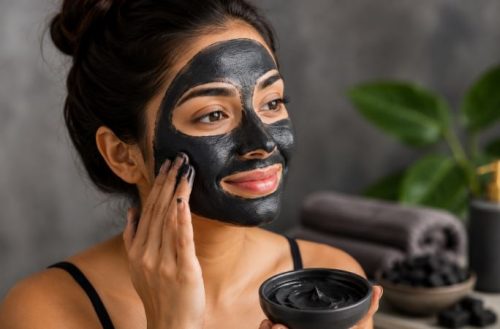
A detox face mask (charcoal or clay-based) focuses on pulling impurities and excess oil out of the pores. It’s about removal, not resurfacing.
An exfoliating mask focuses on removing dead skin cells from the surface, either physically (with a mild scrub texture) or chemically (with acids). It’s about renewal, not extraction.
Charcoal masks often do a bit of both, since the drying, tightening sensation as the mask sets can lift some surface flakiness along with oil. If your main concern is shine and clogged pores, lead with a detox mask. If it’s dullness and rough texture, an exfoliating step matters more, and the two can be alternated through the week rather than layered on the same day.
Curious where activated charcoal fits into older Ayurvedic detox traditions — this guide on Ayurveda’s daily and seasonal approach to skin and body balance is a useful starting point
How to Use a Charcoal Mask Without Overdoing It
Frequency: once or twice a week is enough for most oily skin types. Daily use tends to over-dry the skin and can trigger more oil production as a rebound response.
Application: apply to clean, dry skin in a thin, even layer. A thick layer doesn’t work faster, it just takes longer to dry and pulls harder on skin when removed.
Removal: rinse-off formulas should come off with lukewarm water and gentle circular motions, not scrubbing. If it’s a peel-off mask, stop the moment it hurts more than tugs.
Always follow with moisture: even oily skin needs a lightweight, oil-free moisturizer afterward. Skipping this step is the single most common reason people find charcoal masks “too drying.”
A charcoal cleanser makes a good companion step before masking — this activated charcoal face wash pairs well as a pre-mask cleanse for oily and combination skin
Building It Into a Weekly Oily-Skin Routine
A realistic weekly rhythm: gentle cleanser and lightweight moisturizer daily, an exfoliating step (acid or scrub) once or twice a week, and a charcoal detox mask on a separate day, not stacked with exfoliation. Sunscreen stays non-negotiable every morning, since oily skin still needs protection, and some detoxifying ingredients can make skin slightly more reactive to sun.
Patch test any new charcoal product on your inner arm first, especially if your skin leans sensitive or reactive. If you notice ongoing redness, tightness, or breakouts that don’t settle, that’s a sign to scale back frequency or switch to a gentler clay-based formula instead.
FAQs:
Once or twice a week is generally enough. Overuse can dry out the skin and trigger more oil production as a rebound effect.
Generally yes, since it helps draw out excess oil and debris from pores. It works best alongside, not instead of, a dermatologist-recommended acne treatment for persistent breakouts.
A detox mask focuses on pulling oil and impurities out of pores, while an exfoliating mask focuses on removing dead skin cells from the surface. Both can be part of the same routine on different days.
Overuse can strip natural oils and cause the skin to overcompensate with more sebum. Sticking to one or two uses a week and moisturizing afterward usually prevents this.
Evidence for “detoxifying” claims is limited. What’s better supported is charcoal’s ability to bind surface oil and debris through its porous structure, which is a more accurate way to think about what it’s doing.
External Resources:
Medical News Today — Activated Charcoal Benefits for Your Skin
Leave a Reply