
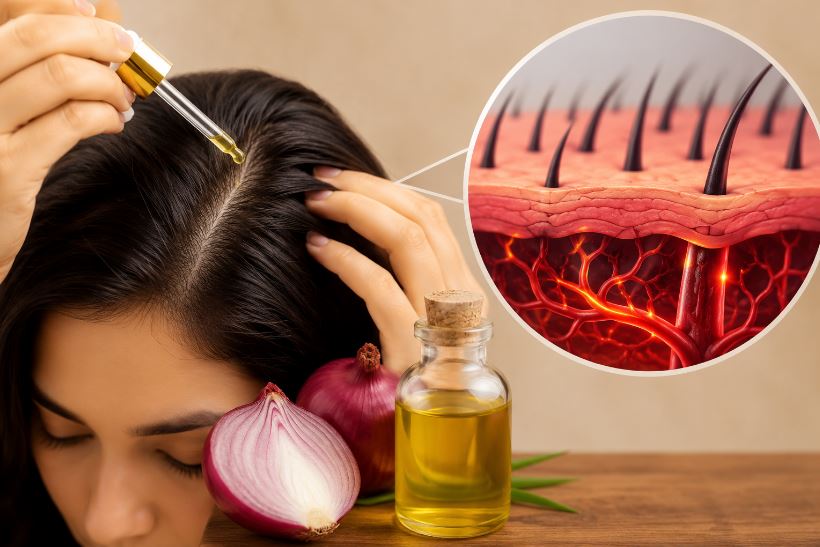
Hair growth depends on one thing more than any product label admits: how much blood actually reaches your hair follicles. Follicles are living tissue. They need oxygen and nutrients delivered through the bloodstream, the same way any other part of your skin does. When circulation to the scalp slows down, follicles weaken quietly, long before you notice extra hair on your pillow.
This is where onion oil scalp blood circulation benefits come into the picture. Onion oil is one of the few Ayurvedic ingredients with both traditional use and a clear, explainable mechanism behind it. Understanding how it actually works helps you use it correctly, instead of just applying it and hoping for results.

Ready to start your circulation-focused scalp routine?
Why Scalp Circulation Matters More Than Most People Realise
Every hair follicle sits inside a small network of blood vessels called the dermal papilla. This structure feeds the follicle everything it needs to produce new hair: oxygen, amino acids, iron, and other nutrients pulled from your bloodstream.
When circulation is strong, follicles stay active longer in the growth phase. When circulation is poor, follicles spend less time growing and more time resting or shedding. Stress, poor posture, dehydration, tight hairstyles, and even sitting at a desk all day can quietly reduce blood flow to the scalp over time.
This is why scalp health tips almost always include some form of stimulation, whether that is massage, oiling, or both together.

Signs Your Scalp Needs Better Circulation
A few everyday signals suggest the scalp is not getting enough blood flow, even before hair thinning becomes obvious.
- A scalp that feels tight or tender, especially at the crown, often points to reduced blood flow rather than dryness alone.
- Hair that grows slowly compared to a few years ago, even without visible thinning, can reflect follicles spending less time in the active growth phase.
- A cool or pale scalp to the touch, compared to the rest of your skin, is a simple physical sign worth noticing during your next oil massage.
- New hairs that come in visibly thinner than the surrounding strands suggest follicles are undernourished, not necessarily dying.
None of these signs are alarming on their own. They are simply cues that a circulation-focused routine, rather than another round of styling products, might be the more useful next step.
How Onion Oil Improves Circulation
Sulfur Compounds and Blood Flow
Onions are naturally rich in sulfur compounds, the same compounds responsible for their sharp smell. These compounds have a mild warming, stimulating effect on skin tissue when applied topically. On the scalp, this stimulation encourages blood vessels near the surface to dilate slightly, allowing more blood to reach the follicle bed.
This is one of the core onion oil hair benefits that separates it from purely moisturising oils. Coconut or almond oil condition the hair shaft well, but onion oil works more directly on the scalp itself.
The Massage Effect
Circulation is not only chemical. It is mechanical. The act of massaging oil into the scalp using circular motions physically increases blood flow, regardless of which oil you use. Combine that motion with an ingredient like onion oil, and the effect compounds. The massage opens circulation, and the oil’s compounds keep the stimulation going after your hands stop.
For best results, massage onion oil into the scalp for eight to ten minutes using your fingertips, not your nails. Focus on the crown and hairline first, since these areas typically show reduced circulation earliest.
Warmth as a Circulation Trigger
Ayurvedic tradition has long recommended warming oil slightly before applying it. Warm oil dilates surface blood vessels faster than cold oil, which means the sulfur compounds in onion oil reach the follicle bed more efficiently. A gentle warm-up, just enough that the oil feels comfortably warm on your wrist, is usually enough. Overheating the oil damages some of its natural compounds, so this step needs a light hand.
What Better Scalp Circulation Actually Does for Hair
Extends the Growth Phase
Hair grows in cycles. The anagen or growth phase is when follicles are most active. Follicles that receive consistent nutrient supply through good circulation tend to stay in this phase longer, which translates to longer, thicker strands over time.
Reduces Shedding Linked to Weak Follicles
Follicles that are undernourished due to poor circulation often produce thinner, weaker strands that shed earlier than they should. Improving blood flow does not stop shedding caused by other factors like hormones or illness, but it does address one common, correctable contributor.
Supports an Ayurvedic Scalp Treatment Routine
In Ayurveda, the scalp is treated as an extension of the nervous system, not just a surface for hair. An ayurvedic scalp treatment routine typically pairs circulation-boosting oils like onion oil with consistent massage, mild heat, and rest. The goal is not a quick fix but a scalp environment that supports healthy hair long-term.

Ready to build circulation-focused oiling into your routine?
Onion Oil Compared to Other Circulation-Boosting Oils
Onion oil is not the only Ayurvedic oil known for supporting scalp circulation, but it works differently from most alternatives.
Bhringraj oil is prized for calming an overactive scalp while still supporting blood flow to the follicles. It suits scalps that feel sensitive alongside thinning.
Rosemary oil is a lighter option, often diluted with a carrier oil, and tends to suit people who want a milder daily stimulation rather than a concentrated weekly treatment.
Almond oil works more on the hair shaft than the scalp itself, though its vitamin E content offers a mild circulation benefit too.
Onion oil sits apart because its sulfur content gives it a stronger, more direct stimulating effect on the scalp specifically. Many people rotate between onion oil for active stimulation and a lighter oil like almond oil or bhringraj oil on the days in between, rather than using one oil exclusively.

The Ayurvedic View: Doshas and Scalp Circulation
Ayurveda does not separate hair health from the body’s broader energy systems. A scalp affected by excess Vata tends to run dry, tense, and cooler to the touch, which often shows up as poor circulation and brittle hair. Onion oil, with its warming quality, is traditionally used to counter this Vata imbalance.
A Pitta-dominant scalp, on the other hand, runs warmer and is more prone to irritation, so onion oil should be used with a lighter hand and always diluted if the scalp feels sensitive. Understanding your scalp’s tendencies, rather than applying the same routine regardless of how your scalp behaves, is part of what separates an effective ayurvedic scalp treatment routine from a generic one.
How to Use Onion Oil for Circulation, Step by Step
- Section the hair so the oil reaches the scalp directly, not just the strands.
- Warm a small amount of oil between your palms or in a bowl of warm water.
- Massage in circular motions for eight to ten minutes, starting at the crown.
- Cover with a warm towel for fifteen to twenty minutes to hold in the warmth and let the oil absorb.
- Wash out with a mild, sulfate-free shampoo, since harsh shampoos strip the scalp and undo some of the benefit.
- Repeat two to three times a week for consistent results rather than daily heavy application.
Consistency matters more than quantity here. A small amount used regularly outperforms a large amount used occasionally.
Common Mistakes That Reduce the Circulation Benefit
Skipping the massage step. Pouring oil on the scalp without massaging it in wastes most of the circulation benefit. The mechanical stimulation is half the effect.
Washing it out too soon. Rinsing within minutes does not give the sulfur compounds enough contact time with the scalp to have a meaningful effect.
Using it on an already irritated scalp. Onion oil is stimulating, which can feel uncomfortable on scalps with active irritation, cuts, or infection. Let any irritation settle first.
Expecting overnight results. Circulation improves gradually with consistent use. Most people notice a difference in scalp comfort and hair fall within four to six weeks of regular application, not days.
Curious how onion oil compares for hair fall specifically, not just circulation?
Who Benefits Most From Circulation-Focused Scalp Care
People dealing with early-stage thinning, a tight or tense scalp, or hair fall linked to stress tend to see the most noticeable improvement from circulation-focused routines. It is also useful as a preventive habit for anyone who spends long hours at a desk, since poor posture reduces blood flow to the head and neck over time.
If hair fall is sudden, patchy, or accompanied by scalp pain, that is a signal to see a dermatologist rather than rely on home care alone.
Travel, irregular sleep, and constant screen time are also quiet contributors to reduced scalp circulation, since all three raise stress hormones that narrow blood vessels throughout the body, including the scalp. People juggling demanding, high-stress schedules often find that a short daily scalp massage does double duty: it supports circulation and gives the nervous system a few minutes to settle, which indirectly helps hair health too. For readers managing stress on a bigger scale, structured Ayurvedic coaching can help address the root stress alongside a home oiling routine.
Bringing Onion Oil Into a Weekly Routine
Onion oil works best as part of a routine, not a one-time treatment. Many people pair a weekly oil massage with a gentle, herbal shampoo to avoid stripping the scalp between applications. Over a few weeks, this combination supports the scalp environment that healthy hair actually needs.

Want an added boost alongside your onion oil massage routine?
Conclusion
Onion oil earns its place in Ayurvedic hair care because it does something specific and explainable: it supports the blood flow that hair follicles depend on to grow. Paired with the right massage technique, warmth, and consistency, it becomes less of a quick fix and more of a long-term scalp habit. Start with two to three sessions a week, be patient with the timeline, and let the follicles do the rest.
FAQs:
Yes, its sulfur compounds and the massage process both stimulate blood flow to hair follicles.
Two to three times a week works better than daily heavy application for most people.
It can help when poor circulation is a contributing factor, alongside a consistent routine.
Yes, gentle warmth helps blood vessels dilate and improves absorption into the scalp.
Most people notice changes in four to six weeks of consistent, regular use.
Leave a Reply