

Somewhere around the third or fourth month after delivery, a lot of new mothers have the same moment. A clump of hair in the shower drain, a hairbrush that looks like it belongs to someone else, and a quiet worry that something is wrong. Nothing is wrong. This is one of the most common, most predictable parts of the postpartum body, and it has a name, timeline, and a set of remedies that actually help.
This guide walks through why hair fall after pregnancy happens, what a postpartum hair fall ayurvedic remedy routine actually involves, why onion oil postpartum use is so widely recommended, and a realistic natural hair regrowth remedy plan you can start this week.
None of this replaces a conversation with your doctor if something feels genuinely off. But for the vast majority of new mothers, what you are seeing in the shower drain is a predictable, temporary phase, and there is a lot you can do to support your hair through it.
Suspect there’s more going on than typical shedding?
Why Hair Falls Out After Pregnancy
During pregnancy, rising estrogen keeps more hair strands in their active growth phase than usual, which is why pregnancy hair often looks unusually thick and full. After delivery, estrogen drops sharply, and all those strands that should have shed gradually over the past nine months shed at once instead.
This is called postpartum shedding, medically known as telogen effluvium. It usually starts around three months after birth, peaks over the following few months, and resolves on its own within six to twelve months as your hair cycle resets. It is not true hair loss, and for most women, hair returns to its normal fullness without any medical treatment.
Breastfeeding can extend this window slightly, since prolactin stays elevated longer than other pregnancy hormones. Sleep deprivation, stress, and the sheer physical demands of caring for a newborn can also make shedding feel more dramatic than it might otherwise, even though the underlying hormonal cause is the same for every new mother.
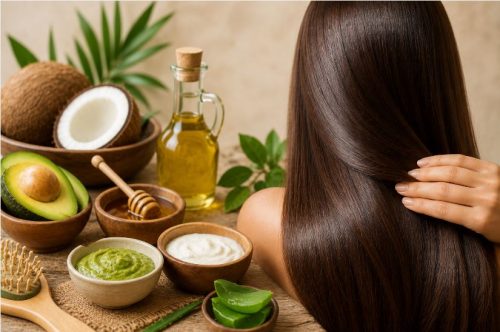
Where Ayurveda Fits Into Postpartum Hair Fall
Ayurveda has always treated the postpartum period as a distinct phase, one where the body is naturally in a Vata-dominant state. Vata governs dryness, movement, and depletion, which lines up closely with what is happening physiologically: hormone levels dropping fast, sleep disrupted, and the body’s reserves stretched thin from childbirth and breastfeeding.
This is why traditional postpartum care in India has always centred on warm oils, nourishing food, and rest, not as a cure for hair fall, but as support for a body working hard to rebalance itself. Modern dermatology and Ayurveda actually agree on the core point: this phase passes, and the most useful thing you can do is support the body through it rather than fight it.
Practically, that agreement matters more than it sounds. It means an ayurvedic remedy for postpartum hair fall is not competing with what your doctor would tell you, it is filling in the part your doctor’s advice often leaves out: what to actually do with your hands and your kitchen while you wait for hormones to settle.

Onion Oil for Postpartum Hair Fall: Why It Is a Go-To Remedy
What Onion Oil Actually Does
Onion oil is rich in sulphur compounds that support keratin production and improve blood circulation to the scalp, both of which matter when hair follicles are trying to re-enter their active growth phase after the postpartum shedding slows down. It is one of the most recommended onion hair oils for hair fall control and regrowth precisely because it works on the scalp environment rather than just coating the hair strand.
How to Use It Safely After Delivery
- Warm a small amount of onion oil between your palms rather than heating it directly, which is gentler on a sensitive postpartum scalp.
- Massage into the scalp in slow, circular motions for 5 to 10 minutes, focusing on areas with the most visible thinning.
- Leave it on for at least an hour, or overnight if the smell does not bother you, then wash out with a mild, sulfate-free shampoo.
- Start with twice a week and increase to three times a week once your scalp adjusts.
Building a Natural Hair Regrowth Remedy Routine
A Weekly Oiling Ritual
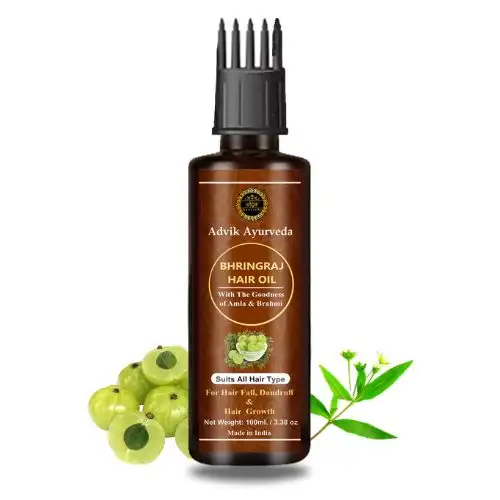
Onion oil works well on its own, but rotating it with a bhringraj hair oil session once a week adds a traditional root-strengthening herb into the mix. Bhringraj has been used in Ayurveda specifically to support hair regrowth after periods of depletion, which makes it a natural fit for the postpartum months.
Nutrition for Hair Regrowth From Within
Hair follicles are low on the body’s priority list when nutrients are limited, especially while breastfeeding. Iron, protein, biotin, and zinc all directly support the hair growth cycle, and continuing your prenatal vitamin postpartum is one of the simplest things you can do alongside topical oiling.
Simple additions help too: a handful of nuts and seeds, an extra egg at breakfast, or a daily glass of milk with a pinch of turmeric are all traditional Ayurvedic suggestions for the postpartum diet that happen to align well with what modern nutrition also recommends for hair health. You do not need an elaborate supplement stack, just consistent, nutrient-dense meals during a period when eating well can easily slip down the priority list.
Gentle Handling During the Shedding Phase
How you handle your hair day to day matters almost as much as what you put on it, especially during the peak shedding months.
- Skip tight hairstyles and high-heat tools during the peak shedding months, since added tension speeds up breakage.
- Use a wide-tooth comb on wet hair instead of a brush, which pulls out less hair in the process.
- Wash hair every two to three days rather than daily, since overwashing can add unnecessary stress to a scalp already shedding more than usual.
Ready to start supporting your scalp naturally?
When Postpartum Hair Fall Needs More Than Oil
Most postpartum shedding resolves within a year without intervention. But if hair loss continues well past twelve months, shows up as bald patches rather than overall thinning, or comes with fatigue, weight changes, or irregular periods, it is worth ruling out thyroid changes or nutrient deficiencies, both common after childbirth. This is where oiling alone will not be enough, and a proper hormonal and nutritional assessment through MorningSun’s personalised wellness programs can help identify whether something beyond normal postpartum shedding is going on.

What to Realistically Expect, and When
- Months 1 to 3: hair often still looks fuller than pre-pregnancy, shedding has not started yet.
- Months 3 to 6: peak shedding, this is when most women notice the change and start to worry.
- Months 6 to 12: shedding slows, new growth becomes visible as shorter strands around the hairline.
- By 12 months: most women see hair return close to its pre-pregnancy density and texture.
An ayurvedic remedy routine will not shorten this biological timeline dramatically, and no product honestly can. What it does is support scalp health through the process, reduce breakage, and often make the regrowth phase visibly stronger.
Rounding Out Your Postpartum Hair Care Routine
Oiling is the foundation, but a few supporting products make the routine easier to stick with. A gentle, sulfate-free shampoo, a lightweight conditioner used only on the ends, and a wide-tooth comb are worth having on hand before the shedding phase even starts. Advik Ayurveda’s full range of hair care products is built around these same chemical-free principles, so you are not layering harsh sulfates and silicones on top of a scalp that is already working hard to recover.
Want to build out your full postpartum routine?
A Nourishing Tradition, Not Just a Trend
Oil massage for new mothers is not a modern wellness trend in India, it is generations old. Traditional postpartum diets built around warm, nourishing foods, including ghee and its role in Ayurveda, were designed around exactly this Vata-pacifying, rebuilding logic long before anyone had a word for telogen effluvium. Leaning on that tradition alongside modern nutritional advice is not either-or, the two support each other well.

The Bottom Line
Postpartum hair fall is common, temporary, and rarely a sign that something is wrong. A consistent oiling routine, patient handling, and good nutrition will not erase the biology, but they support your scalp through it and often make the regrowth phase feel less alarming. Give the process the months it needs, and keep an eye out for signs that point to something beyond normal shedding.
Start supporting your hair through this phase
FAQs:
Yes. Most women experience it starting around 3 months after delivery.
Typically 6 to 12 months, resolving as hormone levels stabilise.
Yes, it supports scalp circulation and keratin production during regrowth.
Yes, topical oils are safe; always avoid ingesting essential oils.
If it continues past 12 months or shows as bald patches.
External Resources
1. Johns Hopkins Medicine — Postpartum Hair Loss (Johns Hopkins University School of Medicine)
2. Cleveland Clinic — Postpartum Hair Loss: Causes, Treatment & What to Expect (nonprofit academic medical centre)
3. NCCIH — Ayurvedic Medicine: In Depth (U.S. National Center for Complementary and Integrative Health)
Leave a Reply