

You bought a charcoal mask. Your skin felt clean and smooth after the first use. So you used it again the next day, and the day after that.
This is where most people go wrong. A charcoal mask works best on a schedule. Use it too rarely and you see no change. Use it too often and your skin turns dry, red, and oddly oily at the same time.
So, how often to use charcoal mask? For most people, once a week is enough. Oily skin can handle twice a week. Dry or sensitive skin does better with one mask every 10 to 14 days.
This guide gives you a clear plan for each skin type. It also explains the Ayurvedic view of cleansing, shows you how to fit the mask into your routine, and lists the warning signs that tell you to slow down. It is written for readers in India and for NRIs in the US, UK, UAE, Canada, or Australia, where water, weather, and stress all change how your skin behaves.
Already know your skin type?
What a Charcoal Mask Actually Does

Activated charcoal is a fine black powder with a very porous surface. When you apply it as a mask, it grips oil, dust, and pollution particles sitting on top of your skin. When you rinse or peel the mask off, those particles leave with it.
That is why your face feels clean afterward. Pores look less clogged, and your skin looks a little more even for a day or two.
What it does not do
Many labels use the word “detox.” Be careful with it. A mask cannot pull toxins out of your blood or organs. It cleans the surface only. Your liver and kidneys handle real detox.
A mask also cannot shrink pores for good or cure acne. Think of it as a deep cleanse, not a treatment. Used well, it supports a healthy routine. Used daily, it becomes one more source of irritation.
Why frequency matters so much
Your skin has a thin outer layer that holds in water and keeps out germs. A mask lifts away a little natural oil each time. Your skin needs a few days to rebuild that oil. If you apply another mask before it recovers, the barrier weakens. You then see tightness, flaking, stinging, or a fresh round of pimples.
How Often to Use Charcoal Mask: The Quick Answer
Use this table as your starting point. Adjust after two weeks, based on how your skin responds.
| Skin type | Ayurvedic lean | Charcoal mask frequency | Leave-on time |
|---|---|---|---|
| Oily, shiny by noon | Kapha | Up to 2 times a week | About 10 minutes |
| Combination | Kapha-Pitta | Once a week, T-zone only | About 10 minutes |
| Normal | Balanced | Once a week or every 2 weeks | About 10 minutes |
| Dry or flaky | Vata | Once every 10 to 14 days | 5 to 8 minutes |
| Sensitive or red-prone | Pitta | Once every 10 to 14 days, after a patch test | About 5 minutes |
Never go beyond twice a week, even if your skin is very oily. Oil that returns fast is often a sign of dehydration, not a need for stronger cleansing.
Charcoal Mask Frequency by Skin Type
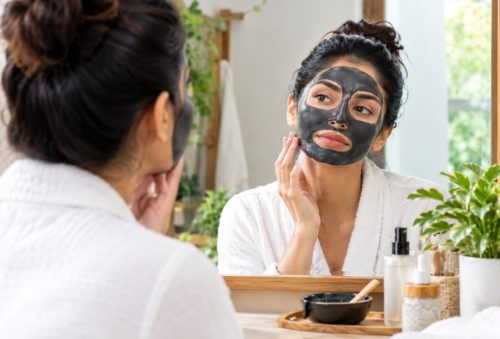
Oily and acne-prone skin
Start with once a week for two weeks. If your skin stays comfortable, move to twice a week with at least three days between masks. Apply it mainly on the nose, chin, and forehead, where pores clog most. Skip active pimples that are red and swollen, because the mask can irritate them further. Advik Ayurveda also has a skincare range for oily skin if you want a gentle cleanser to go with the mask.
Combination skin
Use it once a week on the T-zone only. Leave your cheeks bare, or cover them with plain aloe gel. This is called multi-masking, and it stops dry areas from being over-cleansed.
Normal skin
Once a week, or even every two weeks, is plenty. You have no oil problem to fix, so the mask works as a light refresh before an event or after a long day of travel.
Dry and mature skin
Try once every 10 to 14 days. Shorten the time to five to eight minutes. Choose a mask with soothing ingredients such as aloe or rose water, and follow it with a rich moisturiser. If your skin feels tight after rinsing, wait longer before the next one. For wider advice on caring for the body as you age, read Desh Sansaar’s aging and chronic care guidance.
Sensitive skin
Patch test first. The American Academy of Dermatology advises trying a new skincare product on a small spot of skin for seven to ten days before using it on your face. You can read their patch test guidelines for the full steps. If you see no redness, itching, or swelling, begin with one five-minute mask every two weeks.
The Ayurvedic View: Balance Before Cleansing

Ayurveda does not treat skin as one fixed type. It looks at three energies called doshas: Vata, Pitta, and Kapha. Each one shapes how your skin behaves, and each reacts to cleansing in its own way. For more on Ayurvedic daily care, see the Ayurveda guidance on Desh Sansaar.
Kapha skin: oily, thick, prone to clogged pores
Kapha skin gains the most from a charcoal mask. Cleansing up to twice a week suits it, along with lukewarm water, a light moisturiser, and regular exercise to keep the skin fresh.
Pitta skin: warm, sensitive, prone to redness
Pitta skin flares up fast. Keep masks short and rare. Pair charcoal with cooling ingredients such as sandalwood, rose, or cucumber. Avoid hot water and strong scrubs.
Vata skin: thin, dry, easily flaky
Vata skin needs moisture more than cleansing. Use charcoal rarely, and pair each use with a nourishing cream or oil. Almond and sesame based moisturisers are traditional choices.
Treat these types as a guide, not a diagnosis. Let your skin’s response decide the final schedule.
Exfoliation Tips Ayurveda Style
Many charcoal masks lift a layer of dead cells as they dry and come off. That makes them a form of exfoliation, so count them in your weekly total.
Follow the one-exfoliant rule
On a mask day, skip scrubs, acid toners, retinol, and cleansing brushes. Dermatologists warn that products like retinoids and benzoyl peroxide can make skin more sensitive, and that too much exfoliation leaves it red and irritated. Their advice on safe exfoliation at home is worth a read.
Use gentle Ayurvedic exfoliants on off days
A traditional ubtan mixes gram flour with a pinch of turmeric and milk or rose water. It cleans without harsh grit. Multani mitti, also called fuller’s earth, suits oily skin but can dry out other types. Use either one once a week at most, and never on the same day as your charcoal mask. For more herbal ideas, see these DIY face masks with Ayurvedic herbs.
Massage, do not scrub
Use light circular motions for about 30 seconds, then rinse with lukewarm water. Hot water invites redness, especially on Pitta skin.
Build a Detox Mask Skincare Routine That Works

A mask is one step in a routine, not the whole routine. Here is a simple order to follow. You can find a mild cleanser, moisturiser, and more in Advik’s best skin care products collection.
- Cleanse with a mild face wash to remove sunscreen, makeup, and surface dirt.
- Apply the charcoal mask in a thin, even layer. Keep it away from your eyes, lips, and eyebrows.
- Leave it on for the time given on the label, usually 10 minutes. Do not let it dry until it cracks.
- Rinse with lukewarm water, or peel it off slowly if it is a peel-off type.
- Pat on rose water or a soothing toner.
- Finish with a moisturiser. Use sunscreen the next morning, because freshly cleansed skin is more sensitive to the sun.
A sample week for oily skin
- Monday: charcoal mask at night, then moisturiser.
- Tuesday and Wednesday: gentle cleanse and light moisturiser only.
- Thursday: second charcoal mask, on the T-zone if your cheeks feel dry.
- Friday and Sunday: rest days with hydration.
- Saturday: optional ubtan, not on the same day as a mask.
A sample week for dry or sensitive skin
Use a mask on day one, then give your skin ten to fourteen days. In between, stick to a mild cleanser, a rich moisturiser, and sunscreen. If your skin looks dull, hydrate first before you think about another mask.
Want a mask that fits this routine?
Common Charcoal Mask Mistakes
- Leaving it on too long. A mask that dries and cracks pulls moisture from your skin.
- Using it on broken or sunburnt skin. Never exfoliate over cuts, open pimples, or sunburn.
- Skipping moisturiser. A mask cleans. It does not hydrate.
- Stacking actives. Retinol, strong acids, and scrubs on the same night add up fast.
- Using it whenever skin looks dull. Dullness often comes from dehydration, poor sleep, or stress, not from dirt.
Special Tips for NRIs and Frequent Travellers
Where you live changes your ideal schedule. Here is how to adjust.
- Hard water (parts of the US, UK, and Gulf): mineral residue can leave skin dry. Ease off to once every 10 days and moisturise more.
- Cold weather and indoor heating (Canada, UK, northern US): the air pulls moisture from your face. Drop your frequency by one step.
- Humid summers (India, Dubai, Singapore): oil rises, so oily skin can stay at twice a week.
- Long flights: cabin air is very dry. Skip the mask on travel day and hydrate instead.
- Trips home to India: heat, dust, and pollution build up quickly. A weekly mask can help, followed by moisturiser.
Visiting India soon?
If you want a supervised Ayurvedic programme during your trip, MorningSun lists panchakarma centers near Delhi NCR that you can look through before you book.
Signs You Are Using a Charcoal Mask Too Often

Your skin gives clear warnings. Slow down if you notice any of these:
- Tight, squeaky skin after rinsing.
- Redness or burning that lasts more than an hour.
- Flaky patches around the nose and mouth.
- More oil than before, a common reaction when skin loses moisture.
- New small bumps in areas that were clear.
- Stinging from products that felt fine last month.
How to reset your skin
Stop all masks and scrubs for two weeks. Use a gentle cleanser, a plain moisturiser, and sunscreen. When your skin feels calm again, restart with one mask every 10 to 14 days and build up slowly.
When to see a doctor
See a dermatologist if redness, swelling, or pain lasts more than a few days, or if you get hives or blisters. Stubborn acne or sudden skin changes can sometimes connect to hormones, diet, or general health. You can view clinics on MorningSun to find one for a proper check-up, or find a board-certified dermatologist through the American Academy of Dermatology.
How to Choose a Good Charcoal Mask
- Short ingredient list. Fewer ingredients mean fewer chances of a reaction.
- Soothing extras. Neem, aloe, rose water, sandalwood, and tulsi are common Ayurvedic pairings.
- No heavy fragrance or alcohol, especially for sensitive skin.
- Clear directions. Look for how long to leave it on and how often to use it.
- A patch test. Natural does not always mean gentle, so test every new product.
Ready to start?
The Bottom Line
Once a week suits most skin. Twice a week is the ceiling for oily skin, and every 10 to 14 days is safer for dry or sensitive skin. Patch test, keep sessions short, moisturise after, and let your skin guide you. Steady habits beat strong products every time.
FAQs:
Up to twice a week, with at least three days between sessions.
No. Daily use strips natural oils, weakens your skin barrier, and can cause dryness, redness, and breakouts.
Usually 5 to 10 minutes. Rinse before it dries completely and cracks.
Often yes, if you patch test first and use it once every two weeks for five minutes.
Yes. Moisturiser restores hydration and supports your skin barrier right after cleansing.
No. Keep them on separate days to avoid irritation and over-exfoliation.
It can loosen surface buildup so blackheads look smaller, but results are modest and temporary.
Leave a Reply