
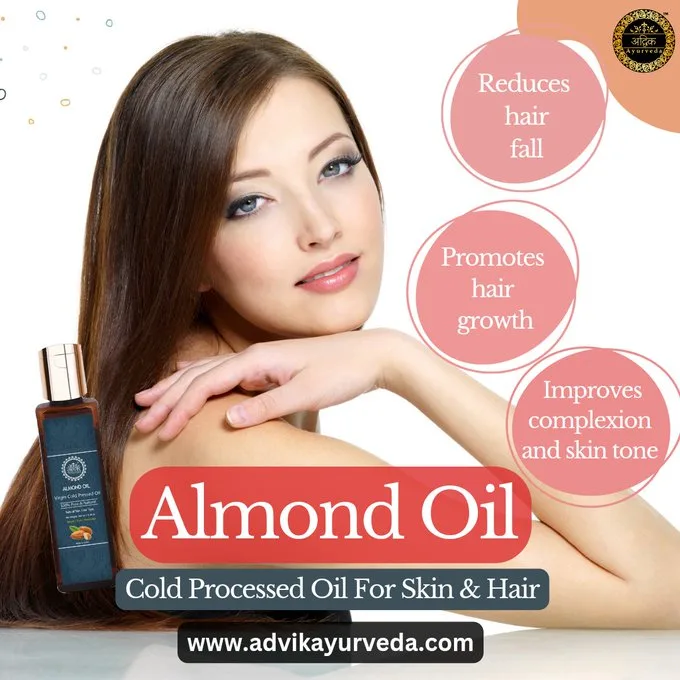
Almond oil sits in almost every Indian home, usually next to the coconut oil bottle. Grandmothers have warmed a few drops between their palms and worked it into hair on Sunday mornings for generations. That habit was never just tradition for the sake of it. Almond oil for hair growth works because of what is actually inside the oil — specific fatty acids, vitamin E, and proteins that hair needs to repair and grow. This guide breaks down the real mechanism behind almond hair oil benefits, not just the folklore. You will learn how the oil reaches the scalp, what it does once it gets there, and how to use it so you see real change instead of just a shinier ponytail for a day.
What Makes Almond Oil Different From Other Hair Oils
Most Ayurvedic oils fall into two camps: heavy and light. Oils like castor oil or onion hair oil sit thicker on the strand and work slowly over hours. Almond oil is different. It has a smaller molecular structure, so it moves through the hair shaft faster and reaches the scalp without leaving a greasy film. That is one reason cold-pressed almond oil is often the first oil recommended for people with fine or oily hair who still need scalp nourishment.
Chemically, almond oil carries oleic acid, linoleic acid, vitamin E, magnesium, and small amounts of protein and zinc. Each of these plays a separate role in hair health, which is why almond oil rarely works alone in Ayurveda. It is usually paired with a stronger root-stimulating oil like bhringraj hair oil for a fuller effect.
How Almond Oil Works on Your Scalp and Hair

The phrase “almond oil for hair growth” gets used loosely online. Here is what is actually happening at the scalp level, step by step.
Vitamin E Calms an Irritated Scalp
An inflamed, itchy scalp is a common but overlooked cause of slow hair growth. Vitamin E is an antioxidant, and antioxidants reduce oxidative stress on skin cells, including the ones lining your hair follicles. A clinical trial published on PubMed Central found that regular almond intake improved measurable antioxidant markers on skin, which supports why vitamin E-rich oils are also used topically for scalp comfort. A calmer scalp environment is simply better ground for hair to grow in.
Fatty Acids Seal in Moisture
Oleic acid and linoleic acid are both emollients. They coat the hair shaft and slow down water loss from each strand. Dry, moisture-starved hair snaps easily, which looks like slow growth even when new hair is coming in fine at the root. Sealing in moisture is one of the most direct almond hair oil benefits, especially in dry weather or after chemical treatments like colouring.
Magnesium and Protein Support the Hair Root
Magnesium deficiency has been linked to weaker hair roots in several nutrition studies, and almond oil carries a small but useful amount of it. The trace proteins in the oil also help patch tiny gaps in the outer hair cuticle, the part that gets roughed up by heat styling, sun, and hard water. A smoother cuticle means less breakage, and less breakage means your hair looks like it is growing faster, because you are simply losing less of it.
Massage Improves Blood Flow to Follicles
Oil alone is only half the story. The act of massaging almond oil into the scalp increases local blood circulation, which carries oxygen and nutrients straight to the follicle. Research summarised by Medical News Today notes that this combination of nutrient delivery and reduced follicle-level stress is where most of the visible benefit of vitamin E oils for hair actually comes from.
The Ayurvedic View: Why Almond Oil Suits Most Hair Types
In Ayurveda, hair health is tied to the three doshas — Vata, Pitta, and Kapha. Almond oil is considered Snigdha, meaning unctuous or oil-rich by nature, which makes it especially good for Vata-type hair that tends to be dry, frizzy, and prone to breakage. Pitta hair, which greys early and thins with heat and stress, also tolerates almond oil well because it is cooling compared to heavier, more warming oils.
If you are not sure which dosha pattern your hair falls into, an honest dosha assessment makes a real difference to which oil and routine will actually help you. Some readers travelling to India for wellness reasons choose to pair this kind of self-care with a proper personalised Ayurveda wellness programme, where a practitioner looks at digestion, sleep, and stress alongside hair and skin concerns, rather than treating hair fall as an isolated problem.
Want the everyday version of this ritual at home?
Almond Oil Benefits Beyond Hair Growth

Ayurvedic households never used almond oil for hair alone. The same fatty acids and vitamin E that help the scalp also work on skin. Regular use is associated with a brighter complexion, softer under-eye skin, and reduced dryness on elbows and knees. For anyone using an almond hair oil as part of a broader self-care routine, this dual use is part of the appeal — one bottle, several jobs, and no synthetic fragrance load on the skin.
How to Use Almond Oil for Hair Growth
Consistency matters more than quantity with almond oil. A small amount used correctly, three times a week, will always beat a large amount used once a month.
Basic Scalp Massage Routine
Warm two to three teaspoons of almond oil until it is comfortably warm, not hot. Part your hair into sections and apply the oil directly to the scalp using your fingertips, not your nails. Massage in slow circles for eight to ten minutes. This is the step most people rush, and it is the step that actually drives blood flow to the follicle.
Overnight Treatment
For deeper scalp nourishment, apply the oil at night, cover your hair loosely, and wash it out the next morning with a mild, sulphate-free shampoo. Doing this once or twice a week is usually enough for most hair types.
Combining With Other Ayurvedic Oils
Almond oil blends well with herb-infused oils. Many people mix it with bhringraj hair oil for stronger root stimulation, since bhringraj works on follicle activity while almond oil focuses on shaft strength and scalp comfort. If you want a full breakdown of which combination suits which hair concern, this guide to Ayurvedic hair oils covers it in more depth.
Who Should Be Careful With Almond Oil
Almond oil is a tree-nut derivative. Anyone with a known nut allergy should avoid it or do a small patch test on the inner arm and wait 24 hours before applying it to the scalp. Pregnant women and anyone with an existing skin condition should check with a doctor first, since individual skin sensitivity varies.
Almond Oil vs Other Popular Ayurvedic Hair Oils

Onion hair oil works faster on active hair fall because of its sulphur content, which is why it is often the first pick for anyone dealing with visible shedding. Bhringraj hair oil is the traditional choice for regrowth and premature greying. Almond oil sits in a different lane entirely — it is the maintenance oil, the one that keeps hair from breaking once it has grown, and keeps the scalp calm enough for the other two oils to actually do their job.
Most Advik Ayurveda customers do not pick just one. They rotate oils depending on the season and hair concern. You can see the full range of hair care products and decide what fits your current routine.
Bringing This Into Your Daily Routine, Wherever You Live
A lot of readers writing in are NRIs or foreign nationals with an Indian family background, trying to recreate a hair care ritual they remember from childhood but without easy access to authentic, unadulterated oils. Cold-pressed almond oil ships well and does not need refrigeration, which makes it one of the easier Ayurvedic staples to keep up with from outside India. For readers who want to understand the cultural and lifestyle side of these rituals in more depth, DeshSansaar’s coverage of Indian lifestyle and wellness traditions is a good place to read more about where these practices actually come from.
And if a trip to India is already on your calendar, pairing your at-home oiling routine with an in-person Ayurvedic consultation can help confirm whether your hair fall is diet-related, stress-related, or simply seasonal. Monthly Ayurveda coaching is one way to get that ongoing guidance instead of a one-time fix.
Ready to start? Bring the ritual home.
The Short Version
Almond oil for hair growth is not a myth, but it is not magic either. It works through a specific, explainable combination of vitamin E, fatty acids, magnesium, and massage-driven circulation. Used consistently, alongside a root-stimulating oil like bhringraj or onion oil when needed, it becomes one of the simplest and most sustainable habits you can build for stronger, calmer, better-behaved hair.
Try it for yourself:
FAQs:
Yes. It nourishes follicles, improves circulation, and cuts breakage, though results take a few weeks.
Two to three times a week works well, either as a massage or an overnight treatment.
No. They work differently. Combine both for stronger, more complete hair care.
Yes. Its light texture suits oily scalps better than heavier oils like castor.
No single oil stops hair fall alone. Diet, stress, and routine all matter too.
Anyone with a nut allergy should patch test first, or avoid it entirely.
External Resources
1. Almonds and Skin Antioxidant Markers — Clinical Study, PubMed Central
2. Vitamin E for Hair: Benefits and Evidence — Medical News Today
Leave a Reply