
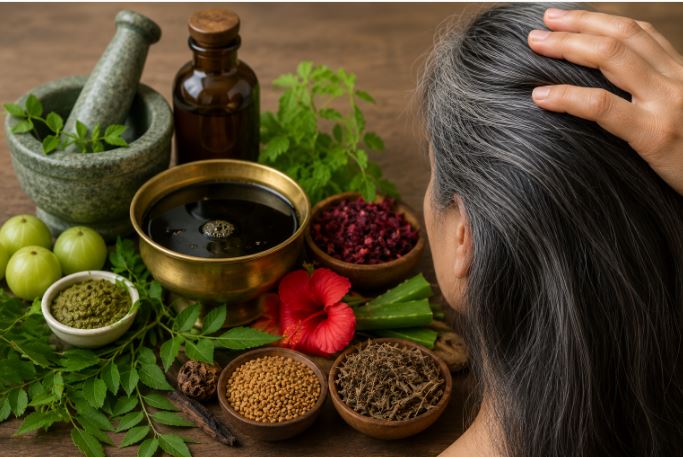
If you’ve browsed the hair-care aisle lately, you’ve probably noticed amla bhringraj shampoo bottles multiplying next to the usual sulfate-loaded brands. Interest in ayurvedic shampoo for hair fall has grown steadily as more people get tired of temporary fixes and start asking a harder question: does this actually do anything, or is “ayurvedic” just a sticker on a bottle?
It’s a fair question. Amla and bhringraj have been part of Indian hair-care traditions for centuries, long before “clean beauty” became a marketing category. But tradition alone doesn’t prove effectiveness, and not every bottle labelled ayurvedic contains a meaningful amount of either herb.
This guide breaks down what amla and bhringraj actually do to hair and scalp, what research says about them, how an amla bhringraj shampoo compares to a regular one, and how to get real results if you try one. No exaggerated claims — just a grounded look at amla bhringraj shampoo benefits based on how these herbs behave on real hair.
What Is Amla Bhringraj Shampoo, Really?
An amla bhringraj shampoo is a hair cleanser built around two Ayurvedic herbs: amla (Indian gooseberry, Emblica officinalis) and bhringraj (Eclipta alba, sometimes called “false daisy”). Instead of relying only on harsh sulfates to strip oil and dirt, these formulas add herbal extracts meant to support the scalp and hair shaft while cleansing.
The idea isn’t new. Both herbs appear repeatedly in classical Ayurvedic texts under keshya dravyas — substances traditionally used for hair health. What’s changed is that modern labs have started testing some of these traditional claims instead of just repeating them, which is where this gets genuinely interesting.
What Amla Does for Hair
Amla is one of the richest natural sources of vitamin C, along with polyphenols and tannins. Vitamin C plays a direct role in collagen synthesis, and a 2008 study published in the Journal of Ethnopharmacology found that amla extract promoted procollagen production in human skin fibroblasts while inhibiting the enzymes that break collagen down. Since hair follicles sit in a collagen-rich structure, this matters for follicle strength, not just skin.
Separately, a patented human trial on amla seed extract — applied with coconut oil over three months — reported reduced hair fall and increases in both hair length and thickness compared to a placebo group. That’s a small study, but it’s a real one, not just a folk claim.
What Bhringraj Does for Hair
Bhringraj has earned the nickname “king of hair” in Ayurvedic literature, and there’s now some lab evidence behind that reputation. A study published in BioMed Research International tested Eclipta alba extract on nude mice bred without hair and found a significant increase in hair density, length, and follicle count compared to untreated controls.
Bhringraj is also documented for antibacterial and antifungal activity, which is relevant because some dandruff is fungal in origin. Traditionally, it’s also associated with slowing premature greying, though human clinical data on that specific claim is still limited.
Amla Bhringraj Shampoo Benefits: What Tradition and Research Both Point To
Put together, here’s what a well-formulated amla bhringraj shampoo can realistically support:
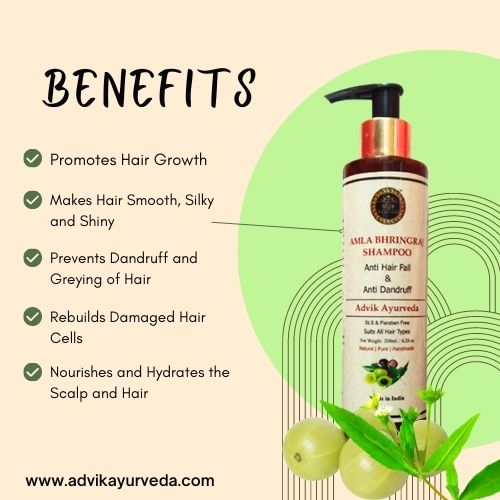
Hair Fall Control
Regular hair fall — not medical alopecia — is often linked to a weakened follicle environment, oxidative stress, and scalp inflammation. Amla’s antioxidant load and bhringraj’s follicle-supportive compounds work on exactly these factors. This is why ayurvedic shampoo for hair fall has become such a common search term: it targets the scalp environment, not just surface cleaning.
Support for Hair Growth
Neither herb works like a drug that forces new growth overnight. What amla shampoo hair growth really means in practice is a healthier follicle and less breakage, which leads to visibly fuller-looking hair over months, not days. Patience matters here more than any bottle claim.
Scalp Health and Dandruff Control
Bhringraj’s antimicrobial properties and amla’s astringent, cleansing nature help manage everyday flaking and an oily, congested scalp — two common triggers for ongoing hair fall that people often overlook while chasing growth serums.
Shine, Softness and Delayed Greying
Amla’s tannins and vitamin C content are associated with smoother hair cuticles and natural shine, while bhringraj’s traditional use for greying — though less studied clinically — remains one of the most consistent claims across older Ayurvedic hair-care texts.
Does It Really Work? Separating Fact From Marketing
This is the question most people actually want answered, and the honest response is: partly yes, partly “it depends on the formula and your expectations.”
What Ayurveda Says
Classical Ayurveda treats hair fall as a symptom of imbalance — often linked to excess pitta (heat) affecting the scalp, poor digestion, or stress. Amla and bhringraj are considered cooling, nourishing herbs used specifically to correct that imbalance, not as isolated “hair vitamins” the way modern marketing sometimes frames them.
What the Research Actually Shows
Lab and small human studies support real mechanisms: antioxidant protection, procollagen support, and follicle stimulation in animal models. What’s missing is large-scale, long-term human trials specifically on shampoo formulations, as opposed to oils or raw extracts. So the herbs have credible science behind them — the shampoo format’s exact results still depend heavily on concentration, formulation, and consistent use.
If you’re the type who wants a clear-eyed answer before trusting any Ayurveda claim — not just for hair, but for bigger health decisions involving India — DeshSansaar’s Ayurveda Explained hub takes an evidence-first look at what’s genuinely effective versus what’s mostly marketing.
Ayurvedic Shampoo for Hair Fall vs Regular Shampoo: What Actually Changes
Most mass-market shampoos are built around sodium lauryl sulfate or similar surfactants, which clean fast but strip natural oils aggressively. Over time, this can leave the scalp dry, irritated, and more prone to shedding — the opposite of what someone dealing with hair fall needs.
An amla bhringraj shampoo, when properly formulated, usually swaps in gentler surfactants and lets the herbal extracts do supportive work rather than relying purely on stripping power. The trade-off: it may lather less dramatically and won’t give the “squeaky clean” feeling some people associate with a good wash. That’s not a flaw — it’s a different cleansing philosophy, one built around scalp balance rather than aggressive stripping.
If your hair fall is tied to a harsh cleansing routine, switching to a herbal formula alone can make a noticeable difference within a few weeks.
How to Use Amla Bhringraj Shampoo for Real Results
Frequency and Technique
Two to three washes a week is usually enough — Ayurvedic hair care isn’t about daily stripping. Focus the shampoo on the scalp, massage gently for 60 to 90 seconds to let the herbal actives sit briefly, then rinse thoroughly. Over-washing undoes the benefit by disturbing the scalp’s natural oil balance.
Pairing With Oil and Diet
Shampoo alone rarely solves hair fall on its own. Applying a traditional bhringraj hair oil a few hours before washing supports the shampoo’s effect, and Ayurveda has always paired external hair care with internal nutrition — enough protein, iron, and vitamin C in the diet. A shampoo can support a healthy scalp; it can’t compensate for a deficient diet.
Ready to try it for yourself?
Buy Amla Bhringraj Shampoo and give your scalp a genuinely herbal wash instead of another sulfate rinse.
Who Should Use It — And Who Needs More Than a Shampoo
Amla bhringraj shampoo works well for everyday hair fall linked to pollution, hard water, styling stress, or a harsh cleansing routine. If you’re noticing more strands in the shower drain than usual, but there’s no bald patch, no hormonal diagnosis, and no sudden clumping, a good herbal shampoo paired with oiling is often enough.
But if hair fall is sudden, patchy, linked to a medical condition, postpartum, or has continued for months despite topical fixes, a shampoo — herbal or otherwise — won’t solve it alone. That level of hair fall usually needs a proper scalp assessment and a structured plan.
For readers who want that deeper, professionally guided route — especially NRIs planning a trip to India anyway — Morning Sun’s Ayurvedic Hair Fall Solutions programs connect you with verified practitioners for a structured, diagnosis-first approach instead of guesswork.
Need more than a bottle can offer?
Explore Ayurvedic Hair Fall Solutions on Morning Sun for a doctor-guided plan.
Buying Guide: What to Check Before You Buy an Amla Bhringraj Shampoo
Not every bottle with “amla” and “bhringraj” printed on the label delivers meaningful benefits. Before buying, check for:
- Ingredient position: amla and bhringraj should appear early in the ingredient list, not buried after ten other fillers.
- Sulfate content: look for “sulfate-free” or a mild surfactant base instead of SLS or SLES as the primary cleanser.
- No added mineral oil or heavy silicones, which coat hair instead of nourishing it.
- Batch testing and shelf-life details — genuine herbal extracts degrade, so freshness matters.
- Realistic claims: be wary of any bottle promising to “stop hair fall in 7 days” — no herb works that fast.
A shampoo that passes these checks is worth trying consistently for at least 8 to 10 weeks before judging results. You can browse Advik Ayurveda’s full shop for ayurvedic hair care essentials to compare formulations side by side.

For NRIs and Foreigners: Sourcing Authentic Ayurvedic Hair Care from India
If you live outside India, sourcing a genuinely herbal amla bhringraj shampoo gets trickier. Products sold through unverified third-party marketplaces are sometimes repackaged, diluted, or well past their effective shelf life by the time they reach you. It’s worth ordering directly from a source that discloses its ingredient sourcing and manufacturing details rather than relying on reseller listings.
This sourcing confusion is part of a bigger pattern many NRIs run into with anything “Ayurvedic” — from shampoos to full wellness retreats — where separating an evidence-based product from a marketing dressed-up one is genuinely hard from abroad. DeshSansaar’s broader guides on navigating Ayurveda-related decisions in India are built specifically for that gap, helping you weigh ground reality against the sales pitch before you spend money or plan a trip around it.
Not sure what’s real and what’s marketing?
Read DeshSansaar’s Ayurveda Explained guides before you buy or book anything Ayurveda-related in India.
Conclusion
Amla bhringraj shampoo isn’t a miracle cure, and it isn’t empty marketing either. The science on both herbs — antioxidant support, procollagen activity, follicle stimulation in lab studies — is real, even if large human trials on the shampoo format specifically are still limited. Used consistently, paired with oiling and a reasonable diet, it’s a genuinely useful, low-risk addition to a hair-care routine, especially for people moving away from harsh sulfate shampoos. Just don’t expect it to outrun genetics, hormones, or a diagnosed medical condition on its own.
FAQs:
It can reduce fall linked to scalp stress and harsh cleansing, not medical or hormonal hair loss.
Most people notice changes after 8 to 10 weeks of consistent, twice or thrice-weekly use.
No. It supports healthy follicles; it doesn’t reverse diagnosed baldness or alopecia.
Yes, if sulfate-free. Herbal formulas are generally gentler than harsh chemical cleansers.
Yes, amla and bhringraj support all hair types and genders equally.
No. Two to three washes weekly is enough; daily use may over-strip the scalp.
Pairing shampoo with bhringraj oil gives noticeably better results than shampoo alone.
External Resources
- Journal of Ethnopharmacology — Amla extract and procollagen production in human skin fibroblasts
- Pharmacological Research — Emblica officinalis (Amla): phytochemistry and medicinal potential
- BioMed Research International — Comparative hair restorer efficacy of Eclipta alba on nude mice
- International Scholarly Research Notices — Ethnopharmacological significance of Eclipta alba
Leave a Reply