

Names carry weight. In Ayurveda, a name is never just a label. Instead, it tells you what a person, a plant or a product stands for. Similarly, our brand name works the same way. This post explains the ayurveda brand philosophy behind Advik: what the word means, what we believe, and how those beliefs shape the way we make and describe our products.
Because many readers live abroad and want a little of home in their routine, this guide is for them. It is also for anyone who is simply curious about Ayurveda. We keep it simple and honest. No big promises. Just the thinking behind the brand. First, let us begin with the name itself.
Why Names Matter: The Meaning of Ayurvedic Brand Names

Most people pick a product by its look or its price. However, few stop to ask what the name means. Yet the meaning of ayurvedic brand names often tells you a lot about a brand’s values.
For example, many Indian brands borrow words from Sanskrit, the ancient language of the classical Ayurvedic texts. Some names point to a plant, like tulsi or neem. Some point to an idea, like balance or purity. Others point to a quality the brand hopes to live up to.
In other words, a good name sets a promise. A thoughtful brand then spends years keeping it. For this reason, ask three questions whenever you meet a brand with a Sanskrit name. What does the word mean? Why was it chosen? Does the brand’s work match that meaning? We want you to ask these questions about Advik too. So, here are our answers.
What Does Advik Mean?
The Sanskrit Roots of the Name
Advik is a Sanskrit-origin name. It is widely understood to mean unique, one of a kind or unmatched. It is closely linked to the word “advitiya,” which describes something with no equal. In Indian families, the name is often given to a child as a wish to grow up distinct and true to themselves.
In addition, different families and sources explain the name in slightly different ways. However, that is normal for old words that travel across many regions and languages. The shared idea is uniqueness.
Why Uniqueness Fits Ayurveda
Ayurveda starts from a simple belief: no two people are exactly alike. Your body type, digestion, sleep, stress and skin all differ from your neighbour’s. Classical Ayurveda calls a person’s natural constitution “prakriti” and treats it as a personal blueprint.
As a result, once you accept that idea, a one-size-fits-all approach makes little sense. The name Advik captures that thought in one word. Care should respect what is unique about you. In fact, that is the heart of our ayurveda brand philosophy.
The Core Beliefs Behind Our Ayurveda Brand Philosophy

However, a philosophy is only useful if you can see it at work. Therefore, we turned ours into four working principles.
1. Nature comes first
Ayurveda has always looked to plants, oils, minerals and kitchen ingredients for care. Likewise, we follow the same path. For example, we lean on botanicals that Indian households have trusted for generations, such as amla, bhringraj, neem, aloe, and sesame or coconut oil bases. Nature is not a marketing colour for us. Instead, it is where we begin.
2. Balance over quick fixes
Ayurveda talks about balance, not shock results. In fact, a routine that pushes your body hard may show something fast, but it rarely lasts. Therefore, we prefer gentle, steady habits. Small daily steps beat dramatic weekend fixes.
3. Honest communication
Traditional knowledge deserves respect, and respect means telling the truth. For this reason, we do not treat Ayurveda as magic. Our products are for everyday care of skin, hair and body. They are not a replacement for medical treatment, and we never pitch them that way.
4. Care that feels personal
Since uniqueness sits at the centre of our name, we also want people to choose with their own needs in mind. Dry or oily, sensitive or sturdy, hot climate or cold: your starting point shapes your routine.
Curious how these principles show up in real products?
Ayurveda Holistic Approach: How It Shapes Our Thinking

People use the word “holistic” loosely. In Ayurveda it has a clear meaning. Health is seen as a link between body, mind, daily habits and the world around you. Change one part, and the others respond. The ayurveda holistic approach asks you to look at the whole picture, not a single symptom. Also, the U.S. National Center for Complementary and Integrative Health shares a neutral overview of Ayurvedic medicine if you want an outside view.
Body, mind and rhythm
For example, classical texts such as the Charaka Samhita stress daily routines, called “dinacharya,” and seasonal routines, called “ritucharya.” First, wake up at a steady time. Eat meals that suit the season. Then, oil your skin or scalp. Finally, wind down in the evening. None of this is complicated. It is all about rhythm.
Doshas in plain words
You will often hear about three doshas: vata, pitta and kapha. Think of them as three broad patterns. Vata is linked with movement and dryness. Pitta is linked with heat and sharpness. Kapha is linked with steadiness and moisture. Most people carry a mix, with one or two leading. This is a traditional framework, not a lab test. However, many people find it a helpful way to think about their habits.
One routine, not many unrelated products
As a result, the holistic view also changes how we think about shopping. Skin, hair and body care are parts of one daily routine, not separate worlds. For this reason, we organise our range around everyday needs. Explore our hair care range for scalp and strand care, our skin care collection for the face, and our bath and body essentials for the rest of the routine.
Our Natural Brand Story from India
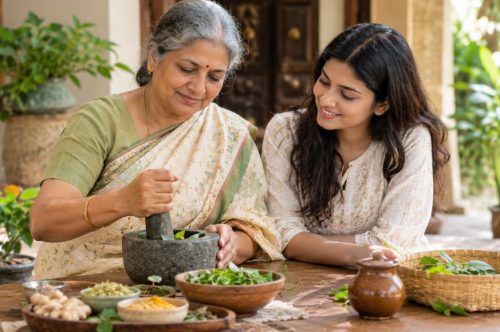
Every brand has a story. A natural brand story India can be proud of should be rooted in real traditions, not borrowed imagery.
Rooted in Indian homes
In fact, long before bottles and labels, Ayurveda lived in homes. Grandmothers warmed oil for head massages. Families used turmeric, sandalwood, neem and rose water as part of normal life. These habits were passed on by watching and doing, not by reading ads. Therefore, our story starts from that living tradition.
Bringing tradition into modern routines
Modern life is busy, so few people can prepare herbs at home every morning. Therefore, our aim is to carry the spirit of those habits into formats that fit today’s bathroom shelf. The wisdom stays old, while the convenience is new.
Why we keep the story simple
A strong brand story does not need drama. Instead, it needs a clear purpose, honest ingredients and steady quality. If a story sounds too grand to check, be careful. Instead, we would rather you judge us by what is in the bottle and how clearly it is explained.
Why This Philosophy Matters for NRIs and Global Readers

Familiar rituals, far from home
Many NRIs tell the same story. In particular, they miss the small rituals of home: the weekend oil massage, the herbal paste, the simple kitchen remedies. However, life abroad can make those habits fade. A brand with a clear philosophy helps you bring them back without guesswork.
Rest is a big part of this. For example, if you are juggling time zones and long work days, the Ayurveda tips for better sleep NRI guide on DeshSansaar offers easy evening habits to try.
Why interest in Ayurveda keeps growing
Interest in Ayurveda has grown across Europe, North America and Australia. If you want to understand why, then read about Ayurveda’s popularity in the West. For global readers, a clear brand philosophy is one way to tell thoughtful brands apart from trend chasers.
Common Myths About Ayurvedic Brands
A few wrong ideas float around. Therefore, let us clear them up.
Myth one: “Natural means safe for everyone.” Not always. Plants can irritate sensitive skin, just like synthetic ingredients can. For this reason, patch testing matters.
Myth two: “Ayurveda is only for older people.” In fact, daily care routines in Ayurveda are meant for every age group, from children to elders.
Myth three: “More herbs mean better results.” A long ingredient list can look impressive. However, quality, balance and fit for your needs matter more than the count.
How to Judge Any Ayurveda Brand’s Philosophy
Of course, not every brand with a Sanskrit name lives up to it. First, use this checklist before you buy from us or from anyone else.
- Does the brand explain its name and values in plain language?
- Are ingredients listed clearly, with common names you can look up?
- Does it avoid promising cures or instant transformations?
- Does it say who the product is for, and who should check with a doctor first?
- Does the story match the product, or is it only a pretty background?
A brand that passes these five checks has, therefore, taken the first step toward earning your trust. To learn how Ayurveda is defined and supported in India, the Ministry of AYUSH is a reliable starting point. The WHO page on traditional and complementary medicine adds a global view.
Want to see how we explain ourselves?
When You Want Care Beyond Products

Still, products are only one part of a holistic approach. Also, some people want deeper guidance, such as supervised therapies or longer wellness stays. For example, MorningSun lists wellness options in one place. Browse its Ayurveda wellness listings to see centres and retreats. In addition, if you are weighing your choices, its guide on Ayurveda retreat vs Western wellness retreat explains the difference in simple terms.
Similarly, if you are curious about therapies for specific concerns, look at Ayurveda for health conditions. Ayurveda also has plenty to say about ageing well, and MorningSun’s page on anti-ageing and longevity is worth a read.
For plain guidance written with families and overseas readers in mind, DeshSansaar’s Ayurveda guidance is a helpful companion. However, anything that involves a medical condition should be discussed with a qualified doctor or a registered Ayurvedic practitioner.
How to Start Your Own Advik Routine
You do not need to change everything at once. Instead, try this simple path.
- First, notice your needs: dry, oily, sensitive or a mix.
- Then, pick one area, such as hair, skin or body, and start there.
- Next, read the ingredient list and the directions for use.
- Also, patch test any new product on a small area first.
- Finally, stay steady for a few weeks before you judge the result.
Small changes add up. In other words, that is the whole idea.
Ready to begin?
Explore the Advik hair care collection or the skin care range and pick the one area you want to start with.
Final Thoughts
Advik means unique. That one word, therefore, shapes how we think about care: personal, natural, balanced and honest. Our ayurveda brand philosophy is not a slogan. Instead, it is a set of habits we try to follow every day. Overall, whether you live in Delhi, Dubai or Dallas, we hope it helps you ask better questions about the products you choose.
Want the full picture?
FAQs:
Advik is a Sanskrit-origin name widely understood to mean unique, one of a kind or unmatched.
It is the set of values guiding a brand’s ingredients, claims and approach to balanced, natural care.
It treats body, mind, daily habits and surroundings as connected, instead of focusing on one symptom.
No. They support daily care, but you should consult a qualified doctor for any medical condition.
Yes, many do. Also, check ingredient lists, patch test first, and follow your country’s rules for imports.
Look for clear ingredients, honest claims, and an open explanation of the brand’s name and values.
External Resources
- Ministry of AYUSH, Government of India – Official source on Ayurveda policy and education in India.
- WHO: Traditional, Complementary and Integrative Medicine – Global overview of traditional medicine systems.
- NCCIH: Ayurvedic Medicine in Depth – Neutral, research-based summary of Ayurveda.
- National Institute of Ayurveda, Jaipur – Leading institute for Ayurvedic education and research.
- Central Council for Research in Ayurvedic Sciences – Research body under the Ministry of AYUSH.
Leave a Reply