
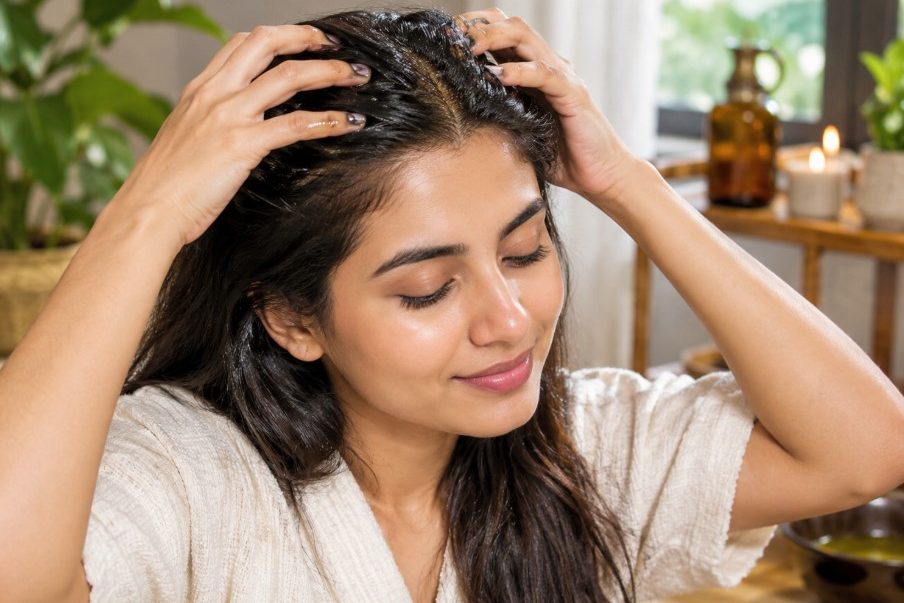
Your hair looks fine after a morning wash. By evening, the roots are flat and shiny. So you wash again, and the oil comes back even faster.
Most advice for this problem is simple: wash more, use a stronger shampoo, skip oil. Ayurveda for oily scalp takes a different route. It asks why your scalp makes extra oil in the first place, then works on that cause. This guide explains the Ayurvedic view in plain words, gives you a weekly routine, and shows where a light onion oil can fit. It is written for readers in India and for Indians living abroad, where hard water and heated rooms add their own problems.
Why Does the Scalp Get Oily?
Your scalp has oil glands at every hair root. They make sebum, a natural oil that keeps skin soft and protects hair. A little sebum is healthy. Trouble starts when the glands make too much, or when oil, sweat, and product residue pile up at the roots.
Common triggers include family genes, hormone shifts, stress, poor sleep, and heavy styling products. Washing too hard can also backfire, because a stripped scalp may try to make up for the lost oil. Healthline’s guide to oily scalp lists these causes if you want the modern medical view.
Ayurveda agrees with much of this. It simply sorts the same signs in a different way.
The Ayurvedic View of an Oily Scalp
Kapha is the main player
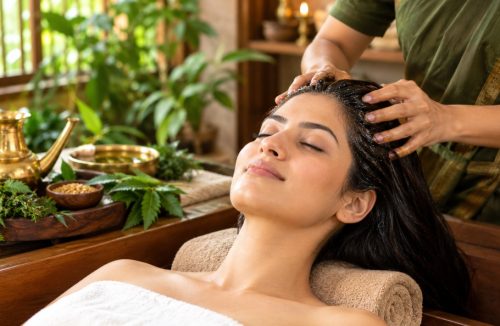
Ayurveda describes three body energies, called doshas: vata, pitta, and kapha. Kapha is heavy, cool, soft, and oily by nature. When it builds up, the scalp can feel greasy, the hair can look limp, and flakes can turn damp and sticky. Ayurvedic practitioners usually link an oily scalp mainly to extra kapha.
Pitta can join in
If your scalp also feels hot, itchy, or red, or the oil returns within hours of washing, pitta is likely involved. Pitta is hot and sharp. A kapha-pitta mix is common, and it needs a gentle, cooling touch rather than harsh cleansing. This is also why one shampoo does not suit everyone.
Digestion matters too
Ayurveda treats digestive fire, called agni, as the base of good health. When digestion is weak, undigested waste called ama is said to build up and add to heaviness, including heavy, greasy hair. This is a traditional idea, not a lab finding. Still, many people notice that rich, fried, late-night meals and a greasy scalp tend to show up together. Our sister site DeshSansaar explains how agni works in its Ayurveda digestion and gut health tips guide.
How Ayurveda Treats Oily Scalp Differently From Common Advice

Here are the five biggest differences.
1. It balances oil instead of stripping it
Harsh, high-foam shampoos remove oil fast, but the scalp may answer by making more. Ayurveda prefers cleansers that clear buildup and leave a little natural oil behind. Traditional choices include shikakai, reetha, and amla.
2. It does not ban oil
This surprises many people. Ayurveda still recommends scalp oiling, called shiro abhyanga, even for oily scalps. The rules are to pick a light oil, use a small amount, and wash it off the same day. The goal is to calm the scalp and support the roots, not to coat them.
3. It looks at the whole day, not just wash day
Food, sleep, stress, and daily routine are part of the plan. A scalp routine alone is treated as half the job.
4. It changes with your dosha and the season
Kapha tends to build in cool, damp months. Pitta tends to rise in heat. Your routine shifts with the weather, which is useful if you move between countries.
5. It treats the person, not just the symptom
A heavy, greasy scalp and a hot, itchy one get different advice. That is why a one-to-one consultation helps. If you want in-person guidance, the scalp detox program at MorningSun pairs herbal therapies with personal scalp assessments.
Herbs Often Used for an Oily Scalp
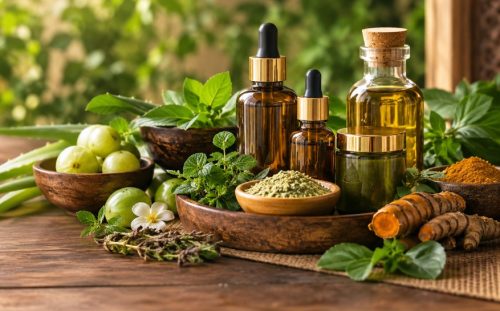
- Shikakai: a mild natural cleanser that lifts oil without a squeaky-dry feel.
- Reetha (soapnut): foams gently and is often paired with shikakai.
- Amla: rich in vitamin C and traditionally used to tone the scalp and add shine.
- Neem: known for its cleansing reputation and popular for itchy, flaky scalps.
- Fenugreek (methi): soaked seeds ground into a paste, used as a pre-wash mask.
- Multani mitti (fuller’s earth): a clay that soaks up surface oil.
- Bhringraj: a classic hair herb that works well in light oil blends.
A fair warning: most support for these herbs comes from traditional use and small studies, not large trials. Treat them as gentle help, and patch test each one first. The NCCIH overview of Ayurvedic medicine explains what research does and does not show about the system.
Oily Scalp Hair Oil: Does Oil Make It Worse?
It feels wrong to oil an oily scalp. But the type, amount, and timing decide the result. A heavy oil left on overnight can clog the roots. A light oil used for a short time can work as a pre-wash treatment. Follow these rules for any oily scalp hair oil:
- Choose a light blend, not thick castor or sesame oil on its own.
- Use one to two teaspoons and focus on the scalp along your partings.
- Warm the oil slightly and massage with your fingertips for five minutes.
- Leave it on for 20 to 30 minutes, not overnight.
- Wash with a mild shampoo, once or twice if needed.
- Oil once or twice a week, not daily.
Advik Ayurveda also compares popular Ayurvedic oils in its guide to oils for hair growth and thickness, which helps when you are choosing a base.
Onion Oil for Oily Scalp: What to Know

Onion oil is a household name in India for hair fall. It is rich in sulphur compounds, and small studies have looked at onion juice for patchy hair loss. Large trials on oily scalps are missing, so it is best to stay realistic about what it can do.
Onion oil makes most sense when an oily scalp comes with thinning or hair fall. Used well, it works as a pre-wash scalp treatment, not a leave-in. Here is a safe way to try it:
- Patch test a drop on your inner forearm and wait 24 hours.
- Use only a few drops, dabbed along your partings, with a light massage.
- Leave it for 20 to 30 minutes, then shampoo well.
- Start once a week. Move to twice a week only if your scalp stays calm.
- Skip it on broken, sore, or badly inflamed skin.
Advik Ayurveda’s Onion Hair Oil combines onion with a coconut oil base. Coconut oil is richer than some lighter oils, so keep your amount small. You can read more about how it is used in this Ayurvedic onion hair oil guide.
Want a pre-wash scalp oil to start with?
Natural Remedies for Oily Scalp You Can Try at Home
- Fenugreek mask: soak two tablespoons of seeds overnight, grind to a paste, apply for 20 minutes, and rinse.
- Multani mitti pack: mix with rose water into a thin paste, apply to the roots for 10 minutes, and rinse before it dries hard. Skip the ends.
- Neem rinse: boil a handful of leaves in water, cool it, and use it as a final rinse.
- Aloe vera gel: a light, cooling layer on the scalp for 15 minutes before washing.
Try one new remedy at a time. That way you can tell what helps and what irritates. These natural remedies for oily scalp work best as support for a steady routine, not as a quick fix.
A Simple Weekly Routine
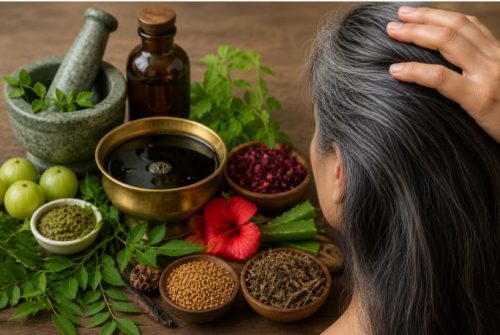
Wash days: two to three times a week
Use lukewarm water, a mild shampoo, and your fingertips, not your nails. Rinse longer than you think you need to. Advik’s Amla Bhringraj shampoo and other hair care products are made for hair fall and dandruff care.
Oil day: once a week
Apply a light oil to the scalp 20 to 30 minutes before your wash. Use the onion oil steps above if hair fall is also on your mind.
Mask day: every ten days
Rotate between the fenugreek mask and the multani mitti pack. Do not use both in the same week.
Daily habits
- Clean your comb or brush every week.
- Change your pillow cover two or three times a week.
- Keep your hands off your scalp during the day.
- Avoid very hot water, which can push oil glands to work harder.
Build your routine with products made around Ayurveda.
Food and Lifestyle for a Kapha-Prone Scalp
Ayurveda suggests that a heavy, oily scalp improves when the body feels lighter. These are general wellness habits, not a treatment:
- Choose warm, freshly cooked, lighter meals.
- Season food with ginger, cumin, coriander, and black pepper.
- Cut back on deep-fried, very sweet, and cold dairy foods, especially at night.
- Eat dinner two to three hours before bed.
- Move for 30 minutes most days to keep circulation active.
Sleep and stress matter just as much. Irregular sleep can throw off hormones that affect oil glands. DeshSansaar’s guide to Ayurveda tips for better sleep is a helpful read, especially after long flights.
Tips for NRIs and Travellers

Living abroad changes how your scalp behaves. A few small fixes help:
- Hard water: it leaves mineral buildup that makes hair feel coated. A shower filter can help.
- Indoor heating: dry air can leave the scalp swinging between dry and oily. Use less oil, and rinse it well.
- Local shampoos: check labels, and avoid heavy silicone-rich formulas on the roots.
- Jet lag: broken sleep can show up on your scalp within days. Return to your routine quickly.
If you want a routine matched to your dosha without leaving your home country, MorningSun runs online lifestyle programs for NRIs and a virtual dosha assessment.
Living abroad and missing your home-grown hair care?
When to See a Doctor
Natural care has limits. See a doctor or dermatologist if you notice thick white or yellow flakes, red patches, constant itching, painful bumps, sudden or patchy hair loss, or no change after six to eight weeks. These can point to conditions like seborrhoeic dermatitis or a fungal infection. The NHS page on seborrhoeic dermatitis lists the signs to watch for.
Ayurveda can support your care, but it should never delay a proper diagnosis. DeshSansaar’s Ayurveda explained section shows how to blend traditional and modern care sensibly.
The Short Version
Ayurveda sees an oily scalp as a balance problem, mostly kapha, sometimes with pitta. Instead of stripping oil, it cleanses gently, oils lightly, and fixes daily habits. Start small: two or three mild washes a week, one light oil session, and warmer, lighter meals. Give it four to six weeks before judging results.
Ready to add a scalp oil to your routine?
FAQs:
Light oiling before washes, mild herbal cleansers like shikakai, a kapha-friendly diet, and steady routines work best together.
Yes, if it is light, used sparingly, left on 20 to 30 minutes, and washed off the same day.
It may help if hair fall comes with oiliness. Patch test first, use a few drops, wash off.
Two to three times a week with a mild shampoo suits most; wash more often after heavy sweating.
Many people see a calmer scalp after four to six weeks of steady care, but results vary.
Ayurveda links heavy, fried foods to oiliness and suggests light, warm meals. Research is limited.
Herbs can still irritate. Patch test every new product and stop if redness or itching appears.
Leave a Reply