

Dull, tired-looking skin is one of the most common complaints people bring to a dermatologist or a skincare shelf, whether they live in Delhi, Dubai, or Denver. Pollution, hard water, air conditioning, and constant travel all wear down your natural glow over time. Long before modern serums and lab-made brighteners existed, Ayurveda had already worked out which plants and minerals could lift dullness and even out skin tone. This guide walks through the ayurveda ingredients for skin brightening that actually hold up, how to combine them into a simple ubtan, and how to keep the ritual going even if you live far from India.
One thing worth saying upfront: brightening is not the same as bleaching. Ayurveda never promised to change your natural skin colour. It focuses on clearing buildup, boosting circulation, and letting your skin’s own tone show through. Keep that distinction in mind as you read on.
What Skin Brightening Means in Ayurveda
In Ayurveda, dull skin is usually read as a sign of ama, a kind of metabolic residue that builds up when digestion, sleep, or stress fall out of balance. When ama sits on the skin’s surface, it blocks light reflection and gives the complexion a flat, tired look. Tan, patchiness, and pigmentation are often linked to excess Pitta, the dosha associated with heat and inflammation.
Brightening formulas in Ayurveda work on three fronts: gentle exfoliation to lift dead skin cells, herbs that calm Pitta-driven pigmentation, and ingredients that improve blood flow to the face. None of this involves harsh chemical peels or skin-lightening agents. If you want the fuller picture on why brightening and lightening get confused so often, our earlier piece on skin brightening vs skin lightening breaks the difference down in more detail.
Ayurveda Ingredients for Skin Brightening Worth Knowing
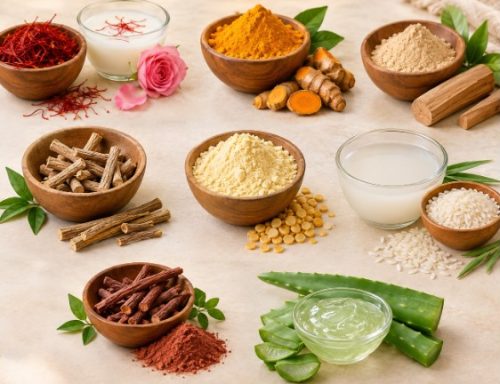
These are the ingredients that Ayurvedic texts, and most modern ubtan formulas, rely on most for brightening.
Saffron (Kesar)
Saffron has been part of Indian bridal beauty rituals for centuries. Its active compound, crocin, is linked to a visible brightening effect and helps calm redness. A few strands soaked in milk or rose water make a simple weekly brightening soak.
Turmeric (Haldi)
Turmeric’s curcumin content gives it strong anti-inflammatory properties, which is why it shows up in Indian beauty rituals from weddings to everyday routines. It helps fade the look of dark spots and gives skin a warmer, more even tone over time. Use it sparingly, since too much can leave a temporary yellow tint on lighter skin.
Sandalwood (Chandan)
Sandalwood cools the skin and is traditionally used for sun-related tanning and heat rashes. It also has a mild astringent effect, which helps tighten open pores after cleansing.
Licorice (Mulethi)
Licorice root contains glabridin, a compound studied for its role in reducing the look of hyperpigmentation. It is gentler than turmeric and suits sensitive skin that reacts to stronger spices.
Gram Flour (Besan)
Besan is the base of almost every traditional ubtan. It absorbs excess oil, lifts away dead skin, and gives the paste enough body to hold the other active ingredients in place.
Rice or Rice Water
Rice water has been used across Asia for generations to even out skin tone. It carries natural starches and antioxidants that leave skin looking smoother and more refreshed after use.
Manjistha
Manjistha is a root valued in Ayurveda for supporting clear, blemish-free skin, and it is often paired with turmeric in face packs meant for pigmentation.
Aloe Vera
Aloe vera hydrates while soothing sun-exposed or irritated skin. Adding it to your ubtan mix stops the paste from drying too fast and leaves skin feeling calm rather than tight.
Building a Brightening Ubtan at Home
You do not need ten ingredients to start. A simple ratio works well: two parts gram flour, one part turmeric or sandalwood powder, and enough rose water or raw milk to form a thick paste. Add a pinch of saffron strands if you have them. This is one of the easiest natural skin brightening remedies to try before moving to a full routine.
- Mix the dry ingredients first, then add liquid slowly until you get a spreadable paste.
- Apply to clean, dry skin in an even layer, avoiding the eye area.
- Leave it on until semi-dry, roughly 10 to 12 minutes.
- Rinse with lukewarm water using gentle circular motions, so the dried paste exfoliates as it comes off.
- Follow with a light moisturiser, since ubtan can leave skin slightly tight afterward.
Use this two to three times a week. Daily use, especially with turmeric, can be too harsh for most skin types.
Ayurvedic Glow Tips for the Rest of Your Routine
An ubtan alone will not fix dullness if the rest of your routine works against it. A few ayurvedic glow tips worth building in:
- Cleanse with a mild, natural face wash instead of soap, which strips the skin’s protective layer.
- Follow with a hydrating toner, like rose water, to balance the skin before moisturising.
- Moisturise daily, even on oily skin. Dehydrated skin often looks duller, not shinier. Advik Ayurveda’s Ultra Glow Hyaluronic Acid Moisturizer is built for this step and layers easily under makeup or SPF.
- Never skip sunscreen. Sun exposure can undo brightening results faster than any single ingredient can fix them.
- Sleep and digestion matter as much as topical care in Ayurveda, since dullness is often traced back to poor digestion or broken sleep.

Sourcing Authentic Ayurveda Ingredients When You Live Outside India
If you’re an NRI or simply live outside India, sourcing genuine saffron, sandalwood powder, or manjistha root is not always easy. Local stores rarely stock them, and online marketplaces are full of diluted or mislabeled versions.
This is where ready-made ubtan-based products help. Advik Ayurveda ships its ubtan and brightening range worldwide, so you get consistently sourced ingredients without hunting down a specialty store. Details on shipping and orders from outside India are listed on our International Orders page.
For readers who want to go a step further and understand the cultural background behind these rituals, bridal ubtan traditions, seasonal skincare, and how Ayurveda fits into everyday Indian life, Desh Sansaar’s collection on Ayurvedic herbs and home remedies is worth a read.
Combine Skincare With a Real Ayurveda Reset
Topical brightening only goes so far if your body is carrying internal heat, poor sleep, or stress-related breakouts. A growing number of NRIs and foreign travellers now plan short Ayurveda wellness stays in India specifically to reset before returning to their daily routine.
If a trip home is coming up, or you’re considering an India-based wellness break, Morning Sun’s personalised skin and glow programs connect you with verified Ayurveda centres offering dosha-based skin protocols alongside the topical care described above. Pairing a short-term ritual like an ubtan with a proper detox and diet reset tends to bring longer-lasting results than skincare products alone.
When Store-Bought Meets Tradition
A DIY ubtan is satisfying, but life abroad, work schedules, and travel rarely leave time to grind fresh sandalwood or source real saffron every week. Advik Ayurveda’s ready-made skin care range takes the same ingredients covered above, saffron, turmeric, licorice, sandalwood, and formulates them into face washes, packs, and serums that skip the prep work. If you’d rather start from the traditional paste itself, our range of ubtans for women and men covers everything from daily-use scrubs to tan-removal packs.
A Quick Note on Sensitive Skin and Real Expectations

Natural does not automatically mean risk-free. Turmeric can stain and irritate reactive skin, saffron can be expensive to source authentically, and any new ingredient deserves a patch test on your inner arm before it goes on your face. Ayurveda works on a cumulative basis, not overnight, so give any new ingredient or product at least four weeks before deciding whether it’s working for you.
Conclusion
Skin brightening in Ayurveda was never about changing your natural tone. It’s about clearing what dulls it, buildup, poor circulation, and sun stress, using ingredients tested over generations rather than a single marketing cycle. Start with one or two ingredients, build the habit, and layer in a proper routine around it. Whether you make your own ubtan at home or reach for a ready formula, consistency will matter more than the exact recipe you choose.
Ready to start?
Advik Ayurveda and bring these ingredients into your routine without the prep work.
FAQs:
Saffron and turmeric are the most researched, widely used ayurveda ingredients for brightening.
Two to three times a week is enough; daily use, especially with turmeric, can irritate skin.
They work well together, but neither fully replaces the other.
Most people notice a visible change after four to six weeks of regular, consistent use.
Yes, in small amounts. Always patch test before applying it to your face.
Yes. Advik Ayurveda ships its ubtan range worldwide with international order support.
External Resources
Add these at the end of the published post as further reading, opening in a new tab:
- NCCIH – Ayurvedic Medicine: In Depth (National Institutes of Health)
- Effects of Turmeric (Curcuma longa) on Skin Health – Systematic Review, Phytotherapy Research (PubMed)
- Advancements in Dermatological Applications of Curcumin – Clinical, Cosmetic and Investigational Dermatology (NIH PMC)
- Theories and Management of Aging: Modern and Ayurveda Perspectives (NIH PMC)
Leave a Reply