
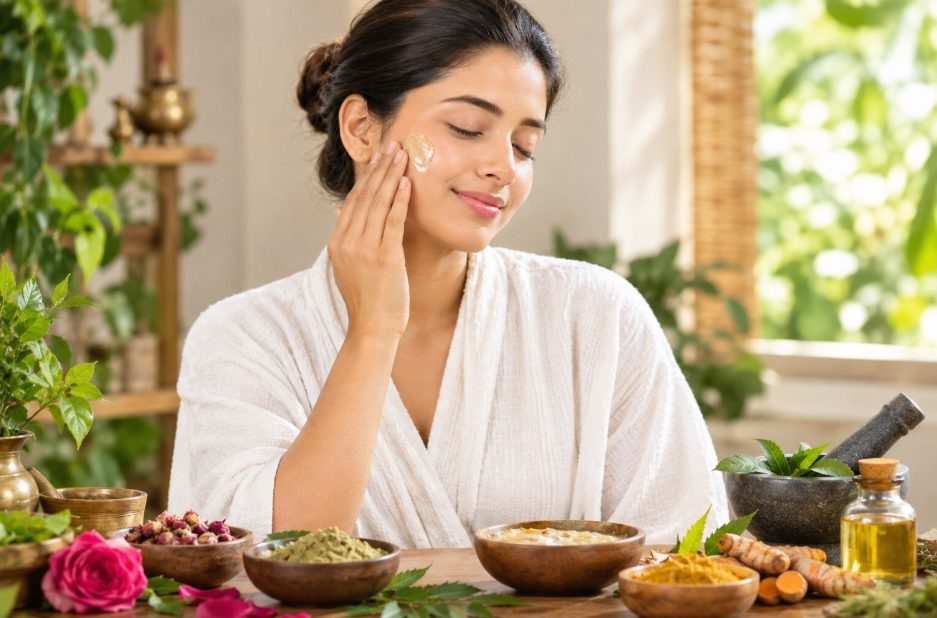
Skin tells a story. Over the years it gets drier, fine lines deepen, and the glow you once took for granted starts to fade. That is why more people are turning to ayurvedic anti aging skincare as a calmer, steadier way to care for their face.
Ayurveda is India’s traditional system of health. It treats skin as a mirror of what happens inside the body. So it looks at digestion, sleep, stress, and daily habits, not just creams. This guide explains the approach in simple steps. You will learn how doshas shape aging, which herbs are commonly used, and how to build a routine you can follow at home. It is written for readers in India, and also for NRIs and global readers who want a clear place to start. Interest in Ayurveda is also growing abroad, as this look at the popularity of Ayurveda in the West shows.
How Ayurveda Views Skin Aging

In Ayurveda, skin is called twacha. Aging is called jara, and it is seen as a natural stage of life, not a disease. The goal is not to stop time. Instead, the goal is to slow early damage, keep skin supple, and support a healthy glow for longer.
Two ideas sit at the center of this view. The first is the doshas, which are three body energies called vata, pitta, and kapha. The second is the strength of digestion, known as agni. When both are balanced, skin tends to look clear and well hydrated. When they are off, signs of aging can appear sooner.
How the Three Doshas Shape Aging
Each dosha shows up in skin in its own way. Vata is linked with dryness and thinning. Pitta is linked with heat, redness, and sun sensitivity. Kapha is linked with oiliness and heaviness. Most people carry a mix, but one dosha usually leads. Knowing yours helps you choose the right oils, herbs, and habits.
Why Digestion and Ojas Matter
Ayurveda teaches that weak digestion creates ama, a sticky buildup that can dull the skin. On the other hand, good digestion supports ojas, the subtle essence linked with vitality and glow. For this reason, food and sleep are part of every skin plan. A face cream alone is rarely enough.
Skin Types by Dosha and What Each Needs

Before you buy anything, spend a week noticing how your skin behaves. Then use the three profiles below as a rough guide.
Vata Skin: Dry, Thin, and Prone to Fine Lines
Vata skin feels tight after washing and shows fine lines early. It needs warmth and moisture. Rich plant oils such as sesame and almond work well. Warm water instead of hot water, and creamy cleansers instead of foaming ones, also help. Herbs like ashwagandha and licorice are often chosen to support this type.
Pitta Skin: Sensitive, Warm, and Easily Flushed
Pitta skin burns easily and may show redness, freckles, or early pigmentation. It needs cooling care. Aloe vera, sandalwood, rose water, and coconut oil are common choices. Avoid harsh scrubs and strong sun exposure. Because this type reacts quickly, always patch test new products.
Kapha Skin: Oily, Thick, and Slow to Wrinkle
Kapha skin tends to age more slowly, but it can look dull or congested. It needs light, stimulating care. Gentle exfoliation with chickpea flour, a light dry massage, and herbs such as neem and turmeric suit this type. Heavy creams can clog pores, so keep your layers thin.
Herbs Used in Herbal Skincare Anti Aging
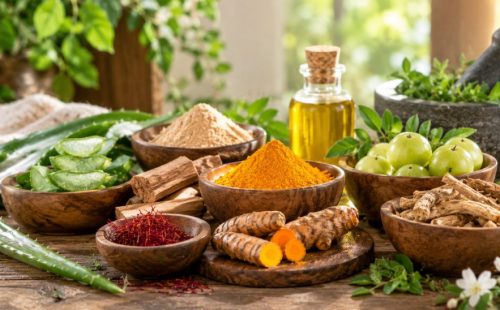
Ayurvedic texts describe many plants for skin. Today, some of them also have early lab research behind them. However, studies are still limited, and results vary from person to person. Think of herbs as steady support, not a quick fix.
Herbs That Calm and Brighten
- Turmeric (haridra): known for its golden pigment, curcumin, which is studied for its antioxidant role.
- Sandalwood (chandana): cooling and soothing, often used in face packs for an even-looking tone.
- Aloe vera (kumari): light and hydrating, a favorite for sun-tired skin.
- Manjistha: a red-rooted herb traditionally used to support clear, even skin.
Herbs That Nourish and Support Firmness
- Ashwagandha: used in oils and tonics to support stress balance, which often shows on the skin.
- Amla (Indian gooseberry): rich in vitamin C and often eaten as food to support skin from within.
- Saffron (kesar): a premium ingredient traditionally added to glow-focused blends.
- Gotu kola (mandukaparni): traditionally used in creams for skin that feels tired and thin.
If you prefer ready-made options, you can browse the herbal skincare range at Advik Ayurveda, which brings several of these ingredients into everyday formats.
Want these herbs in a simple routine?
How to Choose Ayurvedic Skincare Products
Not every product labeled “herbal” is gentle or well made. A few quick checks can save you money and irritation. You can also browse Advik’s best skin care products to compare formulas by skin concern.
- Read the full ingredient list. Plant names should appear clearly, not just in the product name.
- Match the product to your dosha. A heavy oil may suit vata skin but clog kapha skin.
- Look for clear batch details, expiry dates, and storage directions.
- Avoid strong fragrance if your skin is sensitive.
- Start with one new product at a time, so you can spot any reaction.
A Daily Ayurvedic Anti Aging Skincare Routine

Consistency matters more than the number of products. A simple routine done daily beats a long routine done once a week. Here is an easy plan you can adjust to your skin type.
Morning Steps
- Rinse with lukewarm water or a mild herbal cleanser.
- Mist with rose water to cool and soften the skin.
- Apply a light serum or oil suited to your dosha.
- Finish with a broad-spectrum sunscreen. Ayurveda supports your skin, but sun protection is still essential.
Evening Steps
- Remove sunscreen and dirt with a gentle cleansing oil or cream cleanser.
- Wash with lukewarm water and pat dry.
- Massage a few drops of face oil upward for two to three minutes. This is a mini version of abhyanga, the Ayurvedic oil massage.
- Aim to sleep by 10:30 pm when you can. Ayurveda links late nights with dull skin. This Ayurveda sleep guide for NRIs shares more tips for better rest.
The American Academy of Dermatology explains how to pick a product in its sunscreen selection guide. Daily protection remains one of the most proven ways to slow visible aging.
Not sure which products suit your dosha?
Weekly Rituals That Support Younger-Looking Skin
Besides the daily basics, a few weekly habits add extra care.
- Ubtan mask: a paste of chickpea flour, a pinch of turmeric, and milk or rose water. Apply for ten minutes, then rinse. It gently lifts dead cells.
- Warm steam: three to five minutes, once a week, to soften skin before a mask. Skip it if your skin is red or sensitive.
- Full-face oil massage: spend ten minutes with warm oil, then wipe off the excess with a soft cloth.
Always patch test on your inner forearm first. Then wait 24 hours before using any new mix on your face. You can extend the same care to your body with Advik’s best bath and body products, since the neck, arms, and hands show age too.
Natural Anti Aging Remedies You Can Try at Home
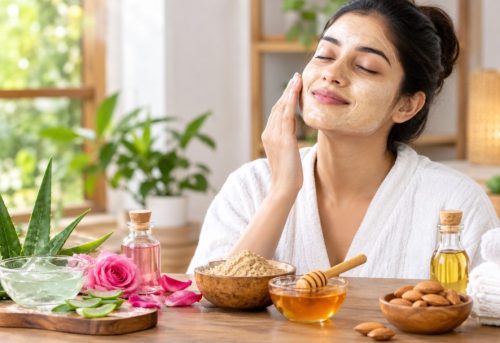
Kitchen-based care has long been part of Indian households. Used with care, these natural anti aging remedies are simple and low cost.
Aloe and Rose Water Cooling Gel
Mix one teaspoon of fresh aloe gel with one teaspoon of rose water. Apply a thin layer for ten minutes, then rinse. It suits pitta and combination skin.
Sandalwood and Honey Mask
Mix half a teaspoon of sandalwood powder with a little honey and rose water. Leave it on for eight minutes, then rinse with lukewarm water. Skin often feels soft and fresh afterward.
Almond Oil Night Massage
Warm two to three drops of almond oil in your palms. Press gently into dry areas, such as the cheeks and around the eyes, without pulling the skin. It works best for vata skin.
Please note that home remedies support routine care. They do not replace medical treatment for skin conditions.
Ayurveda for Wrinkles: What to Expect
Many readers search for ayurveda for wrinkles hoping for fast change. Here is an honest picture. Ayurveda focuses on slowing early lines, improving hydration, and supporting skin texture. It does not erase deep wrinkles overnight.
Most people notice softer, better-hydrated skin within a few weeks of steady care. Changes in tone and glow usually take two to three months. Results depend on age, sun exposure, sleep, diet, and genetics.
For context, the World Health Organization describes ultraviolet radiation as a major cause of skin damage in its UV radiation fact sheet. That is why sun care, shade, and a good hat belong in any anti-aging plan, Ayurvedic or not.
Food and Lifestyle Habits That Show on Your Skin

Ayurveda says skin is built from the food you digest. So what you eat, how you sleep, and how you manage stress all matter.
- Eat warm, freshly cooked meals and keep dinner light.
- Add amla, seasonal fruit, leafy greens, and soaked almonds to your diet.
- Drink water through the day. Warm water and herbal teas work well.
- Use ghee in small amounts if it suits your digestion.
- Practice yoga, gentle walking, and pranayama to lower stress.
- Keep a steady sleep time, even on weekends.
Healthy aging is also a bigger topic than skin alone. For wider guidance on care in later years, you can read this aging and chronic care guidance from Desh Sansaar.
Adapting the Routine for NRIs and Global Readers

If you live abroad, your skin faces different challenges. Indoor heating and cold winters dry the skin. Hard water can leave it tight. Long flights add more stress. Here is how to adapt.
- In dry climates, use a richer oil at night and keep a humidifier in the bedroom.
- Check ingredient labels and local import rules before ordering herbal products.
- Keep the routine short so you can follow it while traveling.
- Talk to your local doctor if you take medicines or have a skin condition.
Some NRIs also plan a wellness trip to India to combine skin care with whole-body therapies. If that interests you, MorningSun’s anti-ageing and longevity page is a useful place to start your research.
Living outside India?
When to Get Expert Advice
Self-care has limits. Please see a qualified Ayurvedic practitioner or a dermatologist if you notice any of the following:
- Sudden dark patches or uneven pigmentation.
- Itching, rash, or swelling after using a product.
- Moles that change shape or color.
- Acne or irritation that lasts more than a few weeks.
A practitioner can check your dosha, digestion, and health history before suggesting herbs or therapies. If a skin concern seems linked to wider health issues, MorningSun’s page on Ayurveda for health conditions can help you understand your options. For general Ayurvedic direction, Desh Sansaar also shares an Ayurveda guidance section.
Common Mistakes to Avoid
- Skipping sunscreen because you use herbal products.
- Using many new products at once. Add one at a time instead.
- Applying raw lemon juice or strong acids directly to the face.
- Expecting overnight results.
- Ignoring sleep, stress, and digestion.
- Skipping the patch test.
Conclusion
Ayurvedic anti aging skincare is about steady habits, not harsh fixes. Know your dosha, choose gentle herbs, protect your skin from the sun, and support it with good food and sleep. Start small, stay consistent, and give your skin a few months to respond.
Ready to start?
FAQs:
A holistic approach using herbs, oils, diet, and habits matched to your dosha to support healthy skin.
It can soften early lines and improve hydration. Deep wrinkles respond slowly, and results vary by person.
Most people notice better hydration within weeks. Tone and glow often take two to three months of steady use.
Turmeric, sandalwood, aloe vera, ashwagandha, amla, and manjistha are commonly used. Choose by skin type.
Most gentle herbal products suit daily use, but always patch test first and stop if irritation appears.
Yes. Apply sunscreen last in the morning. Ayurvedic care supports skin but does not replace sun protection.
Cold, dry climates may call for richer oils and more moisture. Keep the routine simple and consistent.
Leave a Reply