

Hair thinning rarely happens overnight. You notice a wider parting, a thinner ponytail, or more strands on the pillow. Many people then search for ayurvedic ingredients for hair thinning, hoping for a gentle fix that fits daily life.
Ayurveda has used herbs like bhringraj, amla and brahmi for centuries to care for the scalp and hair. Some of these herbs now have early research behind them. But herbs support hair health slowly. They do not work overnight, and they cannot solve every cause of hair loss.
This guide is written for readers in India, NRIs and global readers who want clear, practical steps. You will learn which ingredients help, how to use them, and when to see a doctor.
Why Hair Thins: Two Views, One Goal
Daily shedding of 50 to 100 strands is normal. Thinning is different. It means more hair falls than grows back, or new hair comes in finer than before.
What modern science says
Dermatologists point to genes, hormones, stress, poor nutrition, thyroid problems, anaemia, some medicines and harsh hair care. The cause decides the treatment, so the pattern and timing of your hair loss matter.
What Ayurveda says
Ayurveda links hair health to the three doshas. Too much Pitta (heat) is tied to early thinning and greying. Too much Vata (dryness) is tied to brittle, weak strands. Poor digestion, bad sleep and stress add to the problem. So the Ayurvedic plan treats the scalp, the gut and the mind together, not just the hair.
If poor sleep is part of your story, this NRI guide to Ayurveda tips for better sleep is a useful companion read.
8 Ayurvedic Ingredients for Hair Thinning
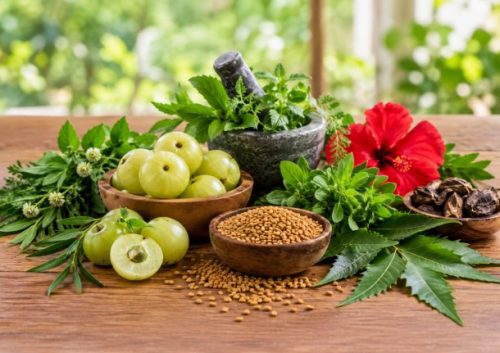
Here are eight herbs with a long record in Indian homes. Each one is easy to find in oils, masks and shampoos.
1. Bhringraj: the classic hair herb
Bhringraj (Eclipta alba) is called the “king of hair” in Ayurveda. If you search for bhringraj hair thinning, you will find it in almost every traditional hair formula.
There is research too. A lab study on rats found that bhringraj extracts cut the time taken for new hair to start growing. They also increased the number of follicles in the growth phase, and the results compared well with 2% minoxidil. This was an animal study, so we cannot promise the same effect in people. Still, it shows why scientists take the herb seriously.
How to use it: warm a bhringraj-based oil, massage it into the scalp for five minutes, leave it for one to two hours, then wash. Do this twice a week.
2. Amla: the vitamin C powerhouse
Amla (Indian gooseberry) is rich in vitamin C and antioxidants. Many readers ask about amla hair oil benefits, and the answer is practical. Amla oil conditions the scalp, eases dryness and leaves hair feeling stronger and shinier. Ayurveda also treats amla as a cooling fruit that calms excess Pitta.
How to use it: use amla oil as a pre-wash treatment. You can also eat one fresh amla, or stir half a spoon of amla powder into water each morning. Start small if your stomach is sensitive.
Want amla and bhringraj in one easy wash-day step?
3. Brahmi: for the scalp and the stressed mind
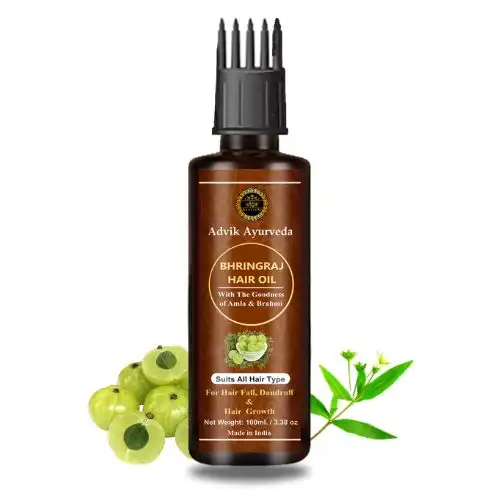
Brahmi (Bacopa monnieri) is known as a calming herb. Stress is a common trigger for shedding, so a brahmi-based oil suits people who feel tense most days. Massage it in during the evening. It also helps you unwind before bed.
4. Fenugreek (methi): a kitchen staple
Methi seeds contain protein and plant compounds that many people find leave hair feeling thicker. Soak two spoons overnight, grind them into a paste and apply it for 30 minutes once a week. It can also ease scalp itch. Always do a patch test first.
5. Neem: for a clean, calm scalp
An itchy or flaky scalp can slow healthy growth. Neem has natural antibacterial and antifungal properties and is a traditional answer to dandruff. Use neem-based washes once or twice a week, not daily, as neem can be drying.
6. Hibiscus: for softness and less breakage
Hibiscus flowers and leaves appear in many hair oils and masks. They add slip and softness, which means less breakage when you comb. Less breakage makes hair look fuller, even before new growth appears.
7. Shikakai and reetha: gentle cleansing
Harsh sulphates can strip the scalp. Shikakai and reetha clean with natural saponins and are much milder. A clean scalp with balanced oil supports healthy follicles.
8. Ashwagandha: support from within
Ashwagandha is an adaptogen. It helps the body handle stress, and stress is a real trigger for thinning. Some Ayurvedic doctors add it to a care plan. Take it only with professional advice, especially if you are pregnant, have a thyroid condition or take regular medicines.
A quick note on safety: herbs are natural, but they can still irritate some scalps. Introduce one new ingredient at a time. If you notice redness, burning or swelling, stop using it and wash your scalp with mild shampoo. This also helps you learn which herb actually suits you.
You do not need all eight herbs at once. Many readers do well starting with bhringraj and amla, then adding brahmi or fenugreek later. Keep notes for a few weeks so you can see what your hair responds to.
Natural Remedies for Thin Hair You Can Start at Home
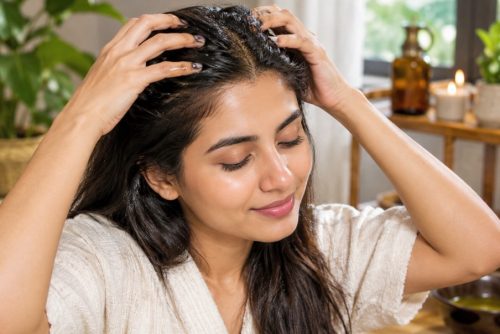
Natural remedies for thin hair work best when they are simple and steady. Here are three habits to build first.
Scalp oil massage (Shiro Abhyanga)
A warm herbal oil massage is a core Ayurvedic habit. It feels calming, and the massage itself may improve blood flow to the scalp. Use your fingertips in slow circles for five minutes. Skip the nails.
Eat for your hair
Hair needs protein, iron, zinc, vitamin D and vitamin B12. Add dal, sprouts, leafy greens, nuts, seeds, curd and seasonal fruit to your plate. If you are vegetarian or live far from home, a simple blood test can show what is missing.
Protect sleep, stress and digestion
Aim for seven to eight hours of sleep, a short daily walk and ten minutes of pranayama. Ayurveda also puts weight on good digestion, so eat warm, freshly cooked meals at regular times. For more everyday habits, the Ayurveda guidance section on DeshSansaar explains them in plain language.
How to Choose Ayurvedic Hair Products That Actually Help

Not every bottle marked “herbal” is worth your money. Check the label before you buy.
- Look for herb names near the top of the ingredient list.
- Prefer shampoos without harsh sulphates and strong artificial fragrance.
- Check for a full ingredient list, batch number and usage directions.
- Patch test on your inner arm 24 hours before first use.
- Pick a base oil your scalp tolerates, such as sesame, coconut or almond.
A shampoo that combines amla and bhringraj carries these herbs into every wash day. The Advik Ayurveda hair care range includes oils and shampoos built around them. You can also browse the Advik Ayurveda blog for more hair care guides.
Looking for a gentle start?
A Simple Weekly Routine for Thinning Hair

- Twice a week: massage warm bhringraj or amla oil and leave it on for one to two hours.
- Two or three times a week: wash with a mild amla and bhringraj shampoo.
- Once a week: apply a methi or hibiscus mask for 30 minutes.
- Every day: eat a protein-rich meal, drink enough water and practise ten minutes of pranayama.
- Every night: use a wide-tooth comb, tie hair loosely and sleep on a cotton or silk pillowcase.
Make wash day easier.
Common Mistakes That Make Hair Thinning Worse
Even the best herbs struggle against poor habits. Watch out for these common slips.
- Oiling too often or leaving heavy oil on overnight every night. This can clog the scalp and cause itch.
- Washing with very hot water, which dries the scalp and weakens strands.
- Combing wet hair roughly. Wet hair breaks easily, so detangle gently from the ends upward.
- Using heat tools daily without protection.
- Switching products every two weeks. Hair needs time, so give any routine at least three months.
- Crash dieting. Sudden weight loss is a well-known trigger for shedding.
Fixing these habits costs nothing. Many people see less breakage within a few weeks, even before any new growth appears. That alone makes hair look fuller and gives your herbal routine a fair chance.
How Long Does It Take to See Results?
Hair grows about one centimetre a month, so patience is key. Most people need at least three months of steady use before they notice less shedding. Visible thickness often takes six months or more. Take a photo of your parting each month in the same light to track progress.
Tips for NRIs and Readers Outside India
Living abroad brings its own hair challenges. Hard water, dry indoor heating and a changed diet can all make hair feel weaker.
- Check your country’s rules on importing herbal products before you order.
- Buy only from sellers who share a full ingredient list.
- Use a mild shampoo and a final rinse with filtered water if your tap water is hard.
- Store oils in a cool, dark place so they stay fresh.
Many families abroad now blend Ayurveda with modern care. DeshSansaar explains why Ayurveda is gaining popularity in the West, which is helpful context if you are new to it.
When Ayurveda Is Not Enough: Know When to See a Doctor

Herbs support hair health. They do not replace medical care. See a doctor if you notice bald patches, sudden heavy shedding, redness, pain or scarring on the scalp, or thinning with tiredness or weight changes. These can point to thyroid problems or anaemia. Thinning after illness, surgery, childbirth or a new medicine also needs a check.
For a whole-body view, MorningSun’s page on Ayurveda for health conditions shows how Ayurvedic care can sit alongside medical treatment. If you want hands-on care, you can look at panchakarma centres near Delhi NCR or browse verified Ayurveda wellness listings. Planning a trip home? Send an enquiry to MorningSun to get started.
You can also read more everyday healing guides in the Health and Healing section of DeshSansaar.
Conclusion
Hair thinning has many causes, so no single herb is a magic fix. The most reliable ayurvedic ingredients for hair thinning are bhringraj, amla, brahmi, fenugreek and neem, used with good food, sleep and a gentle routine. Start small, stay consistent for three months, and see a doctor if the signs worry you.
Ready to build your routine?
FAQs:
Bhringraj, amla, brahmi, fenugreek and neem are widely used. Choose by scalp type and tolerance.
Early lab research is promising, but human studies are limited. Regular use may support scalp health and reduce breakage.
Twice a week suits most people. Apply before washing and leave it on for one to two hours.
They can support growth in mild thinning. Genetic or medical hair loss needs a doctor’s advice.
Generally yes. Check local import rules, read the ingredient list and patch test before first use.
Expect less shedding in about three months and visible thickness in around six months.
Leave a Reply