
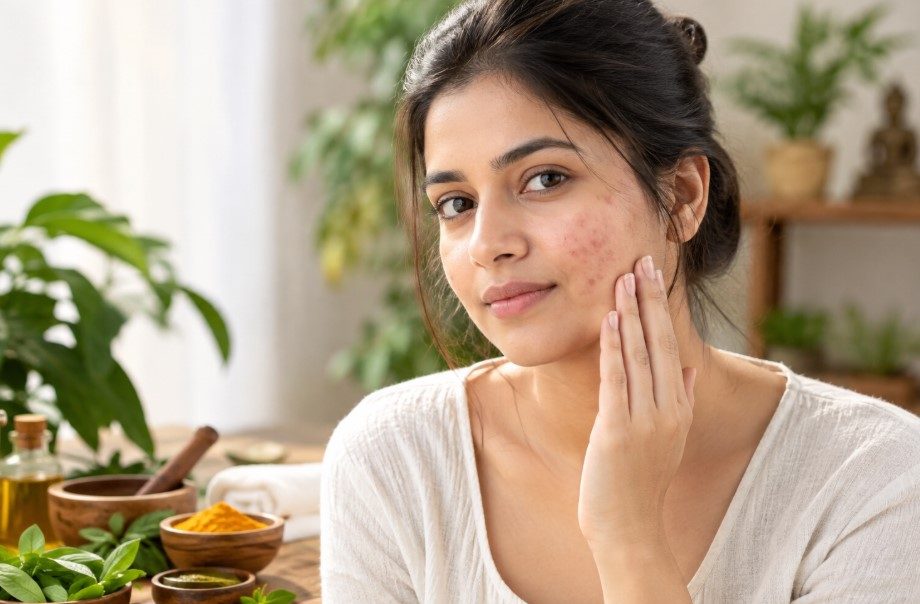
\Acne rarely picks a convenient time to show up. It appears before an exam, a wedding, or a big meeting, and it doesn’t always respond to the same product twice. Ayurveda looks at this differently. Instead of treating each pimple as an isolated problem, it reads the skin as a reflection of what’s happening inside the body. This guide walks through practical ayurvedic solutions for acne that address the root cause, not just the surface, so you can build a routine that holds up over time, whether you live in Mumbai, Dubai, or Toronto.
What Causes Acne, According to Ayurveda

The Pitta-Kapha Connection
Ayurveda calls acne “Mukhadushika” or “Yuvana Pidaka,” and traces it to an imbalance between Pitta and Kapha dosha, with Vata playing a supporting role. Pitta governs heat and metabolism, and when it runs high, it inflames the skin and triggers redness and breakouts. Kapha governs oiliness and structure, and when it accumulates, it clogs pores with excess sebum. Vata, when aggravated, dries the skin between breakouts and slows healing, which is why acne-prone skin often feels oily in some patches and rough or flaky in others.
This is a useful lens even outside Ayurveda’s own vocabulary. A Pitta-dominant breakout tends to look red, tender, and inflamed, often along the jaw or cheeks. A Kapha-dominant breakout tends to look like clogged pores, blackheads, and whiteheads concentrated in the T-zone. Most people see a mix of both, which is exactly why a single harsh product rarely solves the whole picture — it might dry out the oily patches while doing nothing for the inflamed ones.
How Ayurveda Reads Different Skin Types
A Vata-dominant complexion tends to run dry and thin, so acne shows up as small, less inflamed bumps that take longer to heal and often leave dry, flaky patches behind. A Pitta-dominant complexion runs warm and sensitive, so breakouts are redder, more inflamed, and more likely to leave pigmentation. A Kapha-dominant complexion runs oily and thick, so pores clog easily and breakouts tend to be larger, slower to surface, and more persistent. Knowing which pattern fits best helps decide whether a routine should lean cooling and calming, or clarifying and oil-balancing.
Everyday Triggers That Make It Worse
- Oily, fried, or overly spicy food that aggravates Pitta
- Irregular sleep and high stress, both of which spike cortisol and oil production
- Pollution and sweat left on the skin for long stretches
- Harsh, foaming cleansers that strip the skin and trigger rebound oiliness
- Frequently touching the face or resting a phone against the cheek
- Skipping moisturizer because the skin already feels oily
Natural Acne Remedies That Actually Work

Neem: Nature’s Antibacterial
Neem has been used in Indian households for generations to manage breakouts, and modern research backs up the tradition. Reviewed compounds in neem, including azadirachtin and nimbidin, show measurable antibacterial and anti-inflammatory activity, which is exactly what inflamed, bacteria-driven acne needs. A neem-based cleanser or spot gel used consistently, not just when a breakout appears, tends to work best.
Turmeric and Sandalwood for Inflammation
Turmeric contains curcumin, which calms redness and swelling around active pimples, while sandalwood cools Pitta and soothes irritated skin. Both are traditionally combined with a base like gram flour or rose water rather than used alone, since undiluted turmeric can stain and sandalwood paste can feel drying on its own.
Ubtan for Acne: The Traditional Formula

An ubtan is a dry powder mix that’s turned into a paste with water, milk, or rose water right before use. For acne-prone skin, a simple version combines gram flour (besan), a pinch of turmeric, neem powder, and a few drops of rose water. Applied twice a week and left on for ten to fifteen minutes, it gently exfoliates, absorbs excess oil, and calms inflammation without the harshness of a chemical scrub. This is one of the oldest natural acne remedies in Ayurveda, and it still holds up because it treats oil control and inflammation together instead of picking one.
The order matters as much as the ingredients. Apply the paste to clean, dry skin, avoiding the delicate under-eye area, and let it sit until it’s almost dry rather than fully cracking, since fully dried clay-based masks can over-pull moisture from the skin. Rinse with lukewarm water using circular motions, which adds a gentle exfoliating step on the way off. Follow immediately with a light moisturizer, since even oil-absorbing masks can leave the skin barrier slightly dehydrated for an hour or two afterward.
Other Traditional Ingredients Worth Knowing
- Multani mitti (Fuller’s earth) draws out excess oil and is best for Kapha-heavy, congested skin
- Aloe vera gel cools inflamed, Pitta-heavy breakouts and speeds up surface healing
- Tea tree oil, used in a diluted carrier, adds an extra antibacterial layer for active spots
- Rose water balances pH and works well as a toner after any face mask
Building an Ayurveda Skincare Routine for Pimples
Morning Routine
- Rinse with a mild neem or herbal cleanser, never a harsh foaming one
- Apply a lightweight, non-comedogenic moisturizer, even on oily days
- Finish with sunscreen, since inflamed skin scars and pigments more easily in sunlight
Night Routine
- Double cleanse if makeup or sunscreen was worn during the day
- Use a neem or tea tree spot treatment only on active breakouts
- Moisturize before bed to prevent the skin from overcompensating with more oil
Weekly Ritual
Twice a week, replace the regular cleanse with an ubtan mask. This is also a good time to check in on diet and stress levels, since ayurveda skincare for pimples works far better when it’s paired with what’s happening inside the body, not applied as a stand-alone fix.
If mixing an ubtan from scratch isn’t practical on a busy week, Advik Ayurveda’s ready-to-use neem and turmeric range covers the same ground without the kitchen prep. Shop Acne Care Range to see the full line of face washes, ubtans, and spot treatments formulated for acne-prone skin.
Diet and Lifestyle Changes That Support Clear Skin
Cooling Foods for Pitta Balance
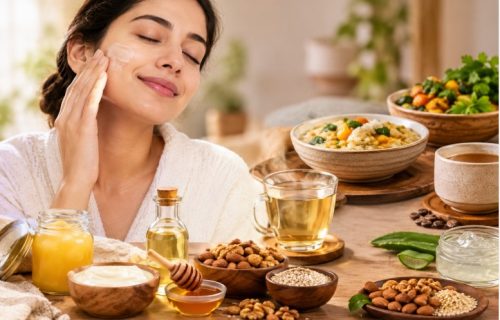
Cucumber, coconut water, leafy greens, and seasonal fruit help cool an aggravated Pitta dosha from the inside. Cutting back on deep-fried snacks, excess caffeine, and very spicy food for a few weeks is often enough to notice fewer new breakouts, even before any topical remedy is added.
Sleep, Stress and Gut Health
Ayurveda has always linked digestion to skin health, and poor sleep or chronic stress shows up on the face faster than most people expect. A consistent sleep schedule and stress management support clearer skin as much as any product does. For readers who want a structured, practitioner-guided approach to diet and dosha balance rather than a self-directed routine, morningsun.in’s Ayurvedic Diet Planning programs build a personalised plan around exactly this kind of Pitta-Kapha imbalance.
When Home Remedies Aren’t Enough: Professional Support

Mild to moderate acne usually responds well to consistent natural care over four to six weeks. Cystic, scarring, or hormonal acne is a different situation, and combining Ayurveda with dermatology-backed treatment tends to bring faster, more durable results than either approach alone.
A few signs point toward getting professional input rather than extending a home routine indefinitely: breakouts that are large, painful, and under the skin rather than surfacing normally; acne that leaves dark marks or pitted scars behind; or breakouts that flare in a clear monthly pattern, which usually signals a hormonal component that topical remedies alone can’t fully address.
This matters especially for NRIs and international readers who are already planning a trip to India for wellness or medical care. Rather than choosing between traditional and modern approaches, morningsun.in’s Skin Rejuvenation Treatments connect patients with verified dermatology clinics that work alongside Ayurvedic protocols, and their Virtual Dosha Assessment is a practical starting point for anyone who wants a professional read on their skin type before committing to a routine.
Patch Testing and Introducing New Ingredients
Even natural ingredients can irritate sensitive or already-inflamed skin. Before adding anything new to a routine, whether it’s a store-bought product or a homemade ubtan, test it on a small area of the inner arm for 24 hours. Introduce one new ingredient at a time, spaced a week apart, so that if irritation does show up, it’s easy to trace back to the cause instead of having to restart the whole routine from scratch.
Common Mistakes That Make Acne Worse
- Over-scrubbing the skin, which increases inflammation and irritation
- Switching products every week instead of giving one routine four to six weeks
- Picking or squeezing pimples, which usually leads to scarring
- Skipping sunscreen because the skin already feels oily or is breaking out
- Ignoring gut health while only treating the skin from the outside
A Note for NRIs and Global Readers

Acne care looks different depending on climate, water quality, and stress levels, which is exactly why so many people in the Indian diaspora find their skin behaves differently once they’re back in India versus abroad. For broader reading on health, family, and everyday life topics relevant to NRIs and foreigners with ties to India, DeshSansaar’s wellness and lifestyle coverage is a useful companion resource alongside a dedicated skincare routine.
Ready to put this into practice?
Conclusion
Clear skin is less about finding one perfect product and more about consistency, patience, and treating the skin as part of the whole body. Ayurvedic solutions for acne work because they address heat, oil, and inflammation together instead of chasing symptoms one at a time. Start small, stay consistent for a few weeks, and adjust based on how the skin responds.
FAQs:
A neem-turmeric ubtan used twice weekly calms inflammation and reduces breakouts within two to three weeks.
No. Use ubtan as a weekly exfoliating mask alongside a gentle daily cleanser, not as a replacement.
Pitta imbalance is the most common driver, with Kapha adding excess oil and congestion.
Yes. Properly formulated natural ingredients like neem and aloe are gentle and rarely irritating.
Most people notice calmer, clearer skin within three to four weeks of consistent use.
Yes, especially for cystic or scarring acne. Combining both usually gives faster, longer-lasting results.
External Resources
Pharmacognosy Reviews — Antibacterial and anti-inflammatory properties of neem (PMC/NIH)
National Cancer Institute (NIH) — Definition of Ayurvedic medicine
Leave a Reply