
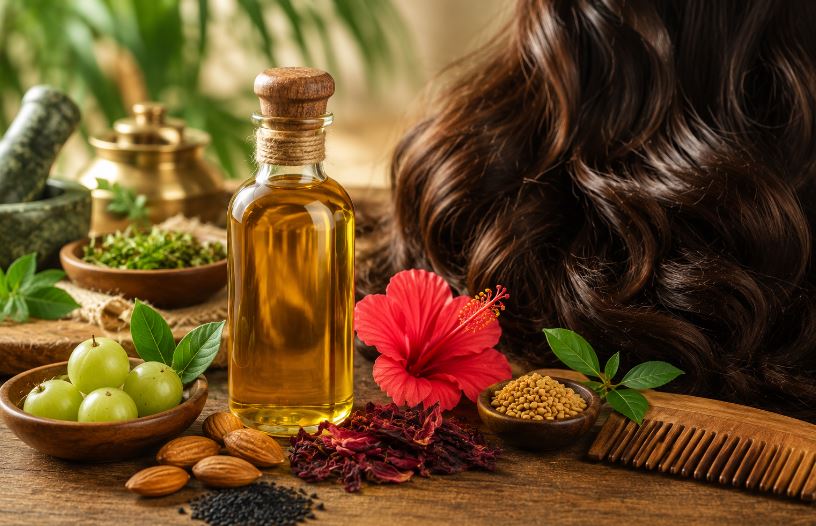
Not every hair oil does the same job, even though most bottles on a shelf promise the same vague benefits. For frizzy, unmanageable hair specifically, the oil you choose matters more than how much of it you use, because frizz has a specific structural cause that only certain oils are actually equipped to address.
Finding the best hair oil for frizzy hair starts with understanding what frizz actually is at the strand level, not just reaching for whatever oil worked for a friend’s completely different hair type.
What Actually Causes Frizz
Hair frizz happens when the outer layer of the hair shaft, the cuticle, lifts away from the strand instead of lying flat. Flat, smooth cuticles reflect light evenly and let strands glide past each other, which reads as smooth, manageable hair. Raised cuticles catch on each other, trap air, and absorb moisture unevenly from the surrounding environment, which is what creates that rough, expanded, halo-like texture most people call frizz.
Humidity makes this worse because raised cuticles absorb ambient moisture unevenly, causing individual strands to swell at different rates. Dryness makes it worse too, since dehydrated hair cuticles lift more easily than well-moisturised ones. This is why frizz often feels like a contradiction: hair that seems both dry and somehow puffy with excess moisture at the same time. Both things are true, just happening at different points along the strand.

Start smoothing frizz from the inside of the strand, not just the surface.
Ayurvedic Frizz Control: Reading Frizz as a Vata Sign
Ayurveda has a useful lens for frizz that goes beyond hair science alone. Vata, the dosha associated with dryness, roughness, lightness, and irregular movement, shows up in hair almost exactly the way frizz behaves: strands that feel dry, rough to the touch, and seem to move unpredictably rather than falling smoothly.
Ayurvedic frizz control traditionally leans on warming, grounding oils to counter these Vata qualities, rather than water-based products that don’t address the underlying dryness and roughness at the cuticle level. This is part of why oil, rather than a leave-in spray or serum alone, tends to genuinely help frizz rather than just temporarily masking it.
Why Oil Choice Matters More Than Oil Quantity
Oils fall broadly into two categories based on how they interact with hair: penetrating oils, which move into the hair shaft itself, and coating oils, which sit primarily on the surface. Frizz caused by cuticle roughness benefits most from oils that can penetrate and smooth from within the shaft, rather than oils that just add a heavy, greasy-feeling layer on top without addressing the lifted cuticle underneath.
This distinction explains why some people pile on more and more oil trying to control frizz, only to end up with hair that looks weighed down and greasy rather than smooth. The problem usually isn’t quantity. It’s whether the oil molecule is actually small enough to penetrate the hair shaft in the first place.
Comparing Common Hair Oils for Frizz
Almond oil is lightweight and rich in oleic and linoleic fatty acids along with vitamin E, allowing it to penetrate the hair shaft while smoothing the cuticle from within. It suits fine to medium hair particularly well, since it conditions without the heaviness some other oils bring.
Coconut oil penetrates well too, thanks to its unique fatty acid structure, but its heavier texture can weigh down fine or medium hair, making it better suited to thick, coarse, or very dry hair types dealing with severe frizz.
Argan oil offers strong shine and smoothing with a light texture, though it tends to be more expensive and is often diluted or blended in commercial products, making quality and concentration harder to verify.
Castor oil is thick and mostly coats rather than penetrates, making it better suited to scalp and growth-focused use than as a primary frizz-control oil for the length of the hair.
Why Almond Oil Is Often the Best Hair Oil for Frizzy Hair
Almond oil earns its place at the top of most frizz-control comparisons for a few concrete reasons. Its lightweight molecular structure allows genuine penetration into the hair shaft rather than just surface coating, which is exactly what raised, roughened cuticles need to lie flat again. Its vitamin E content acts as an antioxidant, helping protect hair from the environmental stress, sun exposure, and pollution that can worsen cuticle damage over time.
Ayurvedically, almond oil, known as Vatada taila, is considered a warming oil specifically suited to countering Vata’s dry, rough qualities, which lines up closely with what frizzy hair structurally needs. It also suits a wider range of hair types than heavier oils, making it a reasonable default starting point for anyone unsure which oil to try first.
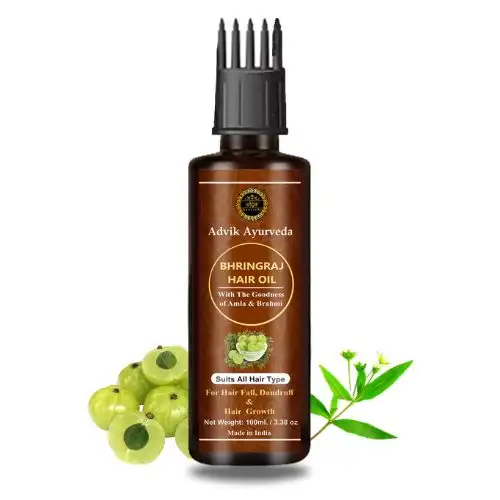
Ready to try a cold-pressed, penetrating oil built for exactly this kind of frizz control?
A Natural Hair Smoothening Oil Ritual for Frizz
Pre-Wash Treatment for Deep Smoothing
Warm a small amount of almond oil between your palms and massage it through dry or slightly damp hair, focusing on the mid-lengths and ends where frizz tends to concentrate. Leave it on for at least forty-five minutes, or ideally overnight, before washing with a gentle, sulfate-free shampoo.
Light Leave-In Application for Daily Control
On non-wash days, a very small amount, just a few drops, rubbed between the palms and smoothed over damp or dry ends helps tame flyaways without the heaviness of a full treatment. Less is genuinely more here; over-applying leads to a greasy look rather than smoother hair.
Consistency Over Occasional Heavy Use
Frizz control improves with regular, moderate use, two to three times a week for treatments plus light daily touch-ups, rather than one heavy application followed by weeks of nothing.
Matching Application to Your Hair Type
Fine, frizzy hair benefits from smaller amounts applied primarily to the ends, avoiding the roots where oil can make fine hair look flat and greasy quickly. Thick, coarse, or very curly frizzy hair generally tolerates and benefits from more generous application throughout the mid-lengths, sometimes even closer to the roots, since coarser hair absorbs oil without the same flattening effect.
How Climate and Water Quality Affect Frizz
Frizz isn’t purely a hair-care problem; environment plays a significant role too. Hard water, common in many regions, leaves mineral deposits on the hair shaft that roughen the cuticle surface over time, making hair more prone to frizz regardless of which products you use. A clarifying, mineral-removing shampoo used occasionally, alongside regular oiling, helps counter this buildup.
Climate change during travel or relocation also affects frizz noticeably. Many people living abroad find their hair behaves differently than it did in India, or vice versa, purely due to shifts in humidity and water hardness. Rebuilding a consistent oiling ritual after a significant climate change, rather than assuming old products will behave the same way in a new environment, often resolves frizz that seems to have appeared out of nowhere. This is a common experience for NRI households adjusting Ayurvedic rituals to a new climate while still wanting to hold onto familiar routines from home.
Seasonal Adjustments for Frizz-Prone Hair
Frizz control isn’t static throughout the year. Humid summer months typically call for slightly more frequent oiling and a stronger focus on anti-humidity styling habits, while dry winter months benefit from richer, more frequent treatments since indoor heating compounds the dryness already affecting hair. Adjusting oil frequency and amount with the season, rather than running one fixed routine year-round, keeps frizz more consistently under control.
Common Mistakes That Make Frizz Worse
Washing with hot water. Hot water lifts the cuticle further, directly working against everything oil treatment is trying to achieve.
Skipping oil because hair already feels oily. Frizzy hair is often dehydrated rather than genuinely oily at the scalp, and skipping moisture entirely tends to worsen frizz rather than control it.
Towel-drying aggressively. Rough towel friction roughs up the cuticle mechanically, undoing much of what a smoothing oil treatment accomplishes. A microfiber towel or gentle patting motion works significantly better.
Applying oil to soaking wet hair. Hair absorbs product less effectively when fully saturated with water. Damp, not dripping, hair allows oil to penetrate more effectively.

Build a consistent, lightweight oiling ritual with cold-pressed almond oil.
Building Frizz Control Into a Complete Routine
Oil is one part of a broader approach to frizz. Reduced heat styling, sulfate-free cleansing, and adequate hydration all work alongside a good oil choice rather than replacing it. For a fuller breakdown of routine-level habits that support smoother hair day to day, our guide on reducing hair frizz naturally covers washing frequency, styling habits, and additional natural ingredients that complement an oil-based routine.
Conclusion
The best hair oil for frizzy hair isn’t about finding the most expensive or most hyped option. It’s about matching an oil’s molecular structure and Ayurvedic qualities to what frizz actually needs: penetration, not just coating, and warmth that counters dryness rather than adding surface shine alone. Almond oil checks these boxes for most hair types, applied consistently rather than heavily, as part of a broader routine that gives frizz less to hold onto in the first place.
FAQs:
Almond oil is often ideal for fine to medium frizzy hair due to its lightweight, penetrating structure.
Damp, not soaking wet, hair generally absorbs oil most effectively for frizz control.
Yes, excess oil can weigh hair down and look greasy without necessarily reducing frizz further.
Two to three deeper treatments a week, with optional light daily touch-ups, works well for most people.
Almond oil suits fine to medium hair better; coconut oil suits thicker, coarser, very dry hair types.
Leave a Reply