
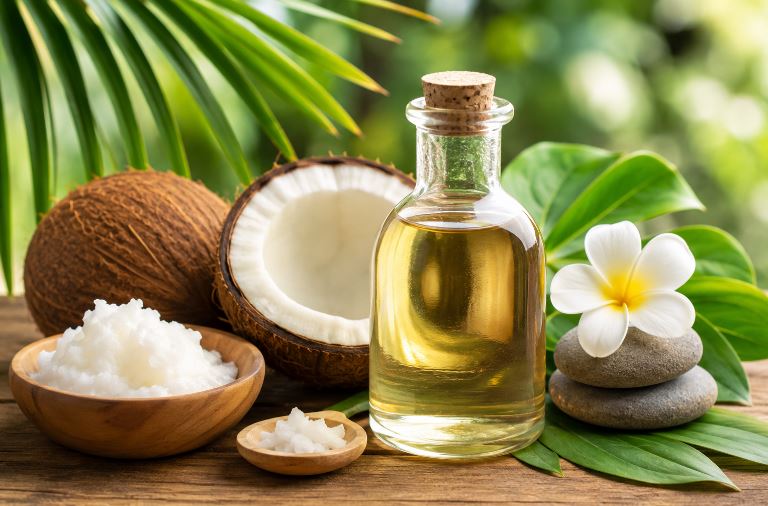
Walk into almost any Indian household and you’ll find a jar of coconut oil somewhere within reach, used for everything from cooking to hair to a quick fix for dry elbows. This isn’t a modern wellness trend dressed up as tradition. Coconut oil ayurveda skincare has roots going back thousands of years, and the reasons it earned that staple status hold up remarkably well against what modern dermatology now understands about the skin barrier.
Understanding why coconut oil became so foundational in Ayurvedic practice, and where it genuinely helps versus where it doesn’t, makes it far more useful than treating it as a vague, one-size-fits-all miracle product.
Coconut Oil’s Place in Classical Ayurveda
In Ayurvedic texts, coconut oil is valued for its cooling, or sheeta, quality, which makes it particularly suited to pacifying Pitta, the dosha associated with heat, inflammation, and irritation. This is a meaningful distinction from warming oils like sesame or almond, which are traditionally reserved more for Vata-related dryness. Coconut oil’s cooling nature made it the go-to choice historically in India’s warmer, more humid regions, where Pitta imbalance and heat-related skin irritation are more common concerns.
Beyond skincare, coconut oil appears throughout Ayurvedic and broader Indian tradition: in cooking, in religious rituals, in postpartum care routines for both mother and baby, and in daily hair oiling practices passed down through generations. Its skincare role developed as one part of a much broader, deeply embedded cultural relationship with the oil, not as an isolated beauty product.

Experience coconut oil’s benefits in a face-safe, traditional ubtan formulation. Try Ubtan Face Wash with Coconut Oil Now →
Coconut Oil Benefits for Skin, According to Ayurveda and Modern Science
A Genuine Barrier-Supporting Fatty Acid Profile
Coconut oil is rich in lauric acid, a medium-chain fatty acid that makes up around half of its fatty acid content. Lauric acid has documented antimicrobial properties, which is part of why coconut oil has traditionally been used on minor skin irritations and why it’s still studied today for its effect on skin-surface bacteria. This is one of the clearer coconut oil benefits skin claims that holds up under modern scrutiny rather than remaining purely anecdotal.

Genuine Moisture-Sealing Properties
Coconut oil is an effective occlusive, meaning it forms a layer on the skin’s surface that reduces water loss. This is measurable, well-documented behaviour, not just traditional claim, and it’s part of why coconut oil remains a reasonable option for dry skin and rough patches, particularly on the body rather than the face.
Antioxidant Content
Coconut oil contains natural antioxidants, including small amounts of vitamin E, which help protect skin cells from oxidative stress caused by environmental exposure. This isn’t as concentrated as some other oils, but it contributes to coconut oil’s overall skin-supporting profile.
Ayurvedic Coconut Oil Uses Beyond Moisturizing
Abhyanga: Daily Self-Massage
Coconut oil is a common base for abhyanga, the Ayurvedic practice of daily self-massage, particularly in warmer climates and warmer seasons. Massaging warm coconut oil into the skin before bathing is traditionally believed to calm the nervous system, support circulation, and nourish the skin simultaneously, treating the practice as much a wellness ritual as a skincare step. This is one of the most enduring ayurvedic coconut oil uses still practiced daily across Indian households today.
Oil Pulling for Oral Health
Though not a skincare use directly, oil pulling, swishing coconut oil in the mouth for several minutes, is a well-known Ayurvedic practice associated with oral hygiene. It’s worth mentioning here because it reflects how deeply coconut oil is woven into daily Ayurvedic ritual beyond the skin alone.
Soothing Minor Skin Irritation
Coconut oil has traditionally been applied to minor sunburn, dry patches, and mild skin irritation, largely due to its combination of moisture-sealing and mild antimicrobial properties. It’s worth noting this applies to minor, everyday irritation rather than significant burns or broken skin, which need proper medical attention.
Gentle Makeup and Impurity Removal
Coconut oil’s ability to dissolve oil-based makeup and impurities makes it a traditional, if messier, alternative to modern cleansing oils. This use has carried over naturally into contemporary “oil cleansing method” routines, even among people with no direct connection to Ayurvedic practice.
Who Should Be Cautious With Coconut Oil
Coconut oil isn’t universally suited to every skin type, and Ayurveda’s own dosha framework actually predicts this. For Kapha-dominant skin, already prone to oiliness and congestion, coconut oil’s heavier, more occlusive nature can worsen clogged pores and breakouts rather than help. Coconut oil is also classified as comedogenic in modern skincare terms, meaning it has a higher likelihood of clogging pores compared to lighter oils, which matters significantly for acne-prone skin regardless of dosha framework.
This is a useful example of where traditional and modern understanding line up well: Ayurveda’s caution around coconut oil for oilier, Kapha-type skin anticipates almost exactly what modern dermatology would now describe in terms of comedogenicity. A blanket recommendation of coconut oil for everyone ignores this nuance.

Want coconut oil’s benefits in a formulated, face-friendly balance rather than raw application? Try Best Face Scrub
Coconut Oil for Other Everyday Skin Uses
Beyond the face and body moisturising already covered, coconut oil shows up in a few other everyday Ayurvedic-adjacent uses worth knowing about.
- Lip care: A small amount smoothed over dry, chapped lips works as a simple, effective occlusive balm alternative.
- Cuticle care: Massaged into cuticles and nail beds, it softens rough skin around the nails effectively.
- Post-sun soothing: Applied to skin that’s had mild, non-burnt sun exposure, it helps replenish surface moisture lost during the day, though it should never be applied to actual sunburned or broken skin.
- Stretch mark and scar massage: While it won’t erase existing marks, regular gentle massage with coconut oil is commonly used to keep skin in the area supple and well-moisturised during and after pregnancy.
These smaller, everyday applications are part of why coconut oil earned its staple status. It’s rarely the single dramatic solution to one specific problem; it’s the reliable, always-on-hand option for a dozen small things.
Common Myths About Coconut Oil in Skincare
“It’s natural, so it works for everyone.” As covered above, coconut oil’s comedogenic potential makes it a poor fit for some skin types, regardless of how natural or traditional the ingredient is.
“More coconut oil means better results.” A thin, well-absorbed layer supports the skin barrier; a thick, greasy application mostly just sits on the surface without additional benefit, and increases the risk of clogged pores.
“Coconut oil provides sun protection.” Despite some popular claims, coconut oil offers only minimal, unreliable UV protection and should never replace a proper sunscreen, a point worth stating plainly given how often this myth circulates.
“All coconut oil is the same.” Refined, deodorised coconut oil sold for cooking and virgin, cold-pressed coconut oil marketed for skincare differ meaningfully in processing and retained nutrient content, even though both are technically “coconut oil.”
Coconut Oil as a Natural Moisturizer for India’s Climate
Coconut oil’s cooling quality and widespread availability made it a practical, climate-suited natural moisturizer India relied on for centuries, particularly in southern and coastal regions with hot, humid weather. This is worth contrasting with the colder, drier conditions where Ayurveda instead recommends warming oils like sesame or almond. Using coconut oil during a harsh, dry winter, or in a cold climate abroad, often doesn’t deliver the same benefit it does in the warm, humid conditions it was traditionally suited to, since it doesn’t counter dry, cold-weather skin qualities the way a warming oil would.

How to Use Coconut Oil in a Modern Skincare Routine
As a Body Moisturizer, Not Necessarily a Face Product
For most people, coconut oil works best applied to the body, particularly rougher areas like elbows, knees, and heels, rather than the face, where its comedogenic potential is more likely to cause issues for combination or acne-prone skin.
Blended Into a Formulated Cleanser
Rather than using raw coconut oil directly on the face, a formulated cleanser that combines coconut oil with complementary ingredients, such as jojoba oil for lighter balance, offers the moisture-sealing benefit with reduced pore-clogging risk compared to using the oil alone in concentrated form.
As Part of an Ubtan-Style Cleansing Ritual
Ubtan, the traditional Ayurvedic cleansing paste made from herbs, gram flour, and oils, often incorporates coconut oil as a base to bind ingredients and add gentle moisture while cleansing. This traditional format balances coconut oil’s benefits with other ingredients that offset its heavier qualities, rather than relying on coconut oil alone.
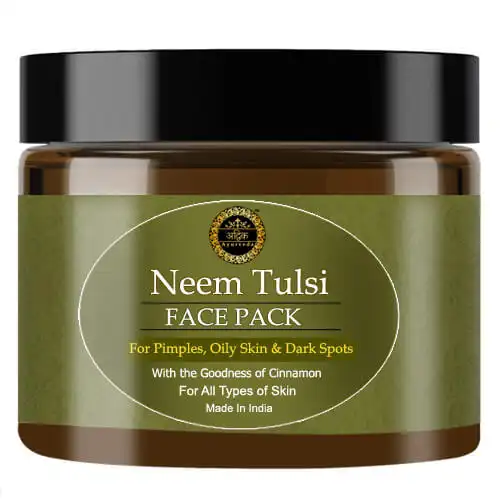
Get the traditional ubtan format, with coconut and jojoba oil balanced for the face. Try Face Pack for Pimples →
Choosing Quality Coconut Oil
Cold-pressed, virgin coconut oil retains more of its natural antioxidants and beneficial compounds compared to refined coconut oil, which undergoes higher heat processing that strips away some of these properties.
Conclusion
Coconut oil earned its place as an Ayurvedic skincare staple through a genuine combination of practical benefit and cultural ubiquity, not just tradition for its own sake. Its cooling, moisture-sealing, and mildly antimicrobial properties hold up well under modern scrutiny, provided it’s matched to the right skin type, climate, and use case rather than treated as a universal fix.
FAQs:
No, it can clog pores for oily or acne-prone skin; it suits dry, normal skin and body use better.
Not necessarily; many people find it better suited to body use or blended formulations rather than daily facial use.
It suits hot, humid climates well due to its cooling quality, but climate and skin type both matter more than geography alone.
Virgin, cold-pressed oil retains more natural antioxidants and is generally better suited to skincare use.
It can work as an occlusive moisturizer for some skin types, though many people prefer it layered over a hydrating product.
External Resources
- NCCIH – Ayurvedic Medicine: In Depth
- American Academy of Dermatology – Coconut Oil and Skin
- MedlinePlus (NIH) – Coconut Oil
Leave a Reply