
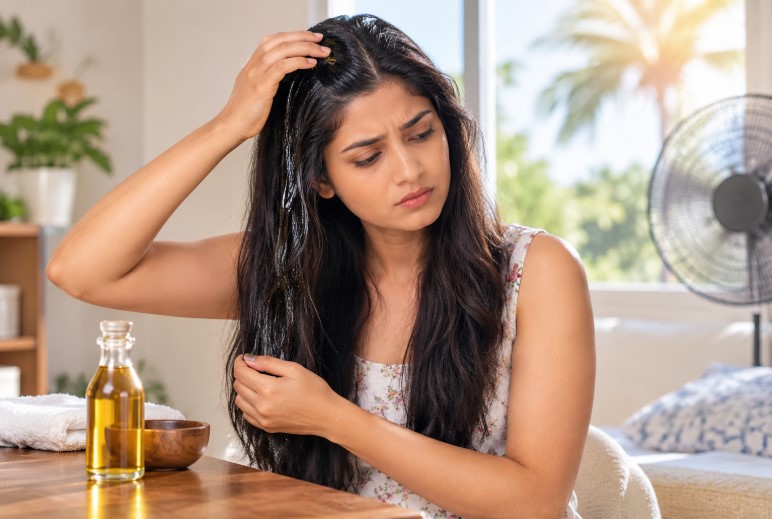
Walk into any store and you will find dozens of hair oils. Coconut, almond, amla, argan, castor. Every bottle promises thick, shiny hair. Yet the wrong oil can leave dry hair still brittle, or make an oily scalp itchy and flat.
The fix is simple. Pick your oil by hair type and scalp type, not by a label or a trend. This guide shows you how to choose hair oil for hair type in a few clear steps. You will also see the best oil for dry hair, the best oil for oily scalp, and a short Ayurvedic hair oil guide to tie it all together. It works whether you live in Delhi, Dubai, London or Toronto.
Why the Right Hair Oil Matters
A good hair oil coats the strand, slows moisture loss and cuts friction while you comb. It also cares for the scalp skin, where every strand begins. Healthy scalp skin also starts with a simple Ayurvedic skin care routine.
But oils are not all the same. Some are light and sink in fast. Others are heavy and sit on top. A heavy oil on an oily scalp can trap sweat and dust. A light oil on very dry hair may vanish in an hour and do little.
A matched oil can reduce dryness and frizz, make combing easier so fewer strands snap, and keep the scalp comfortable.
Oil cannot change your genes or grow hair on a bald patch. It can improve how hair feels and handles daily wear.
Step 1: Know Your Scalp Type and Hair Type

Most people treat these as one thing. They are two. Your scalp can be oily while the lengths are dry. So check both.
How to check your scalp type
Wash your hair with a mild shampoo. Do not apply anything after. Then wait one full day and look at your scalp in a mirror.
- Oily scalp: roots look greasy, hair feels flat and heavy by evening
- Dry scalp: tight, flaky or itchy skin, with small white dry flakes
- Normal scalp: comfortable, no strong oil or flaking
- Combination scalp: oily near the front and crown, drier near the ends
Big, yellow, greasy flakes with redness may point to dandruff or another scalp condition. That needs a different approach, which we cover near the end.
How to check your hair type
Now look at the strands themselves. Three things matter most.
- Texture: straight, wavy, curly or coily. Curlier hair is usually drier, because scalp oil struggles to travel down the bends.
- Thickness: fine strands are easily weighed down. Thick strands can handle richer oils.
- Porosity: this is how well hair absorbs and keeps water. If water beads on hair and it dries slowly, porosity is low. If hair soaks up water fast and turns dry or frizzy soon, porosity is high.
Write down your answers, for example: “oily scalp, dry ends, wavy, high porosity.” That tells you more than “normal hair.”
Not sure what your notes mean for your oil choice?
The Ayurvedic View: Doshas and Your Hair

Ayurveda has its own map for choosing oils. It looks at the three doshas: Vata, Pitta and Kapha. Think of them as three broad body patterns. Most people lean toward one or two.
- Vata type: dry, rough, thin or frizzy hair. It needs warm, nourishing and grounding oils.
- Pitta type: fine hair, sensitive scalp, early greying or oiliness with heat. It needs cooling, soothing oils.
- Kapha type: thick, heavy, oily hair and a cool, oily scalp. It needs light oils and shorter oil time.
You do not need to treat this as strict science to find it useful. It matches what you see in daily life. Dry, frizzy hair wants rich oil. Oily, heavy hair wants light oil. If you want to understand your dosha better, the Ayurveda guidance section at DeshSansaar explains the basics in plain language for readers living in India and abroad.
Use the dosha idea as a starting point, then confirm it with the real signs from Step 1.
Best Oil for Dry Hair
Dry hair feels rough, tangles easily and looks dull. The ends often split. The best oil for dry hair seals in moisture and adds softness. Heavier, richer oils are your friends here.
Good picks for dry hair
- Coconut oil: one of the few oils shown in studies to reduce protein loss in hair. It is a safe base for most dry hair.
- Sesame oil: a classic in Ayurveda for Vata type hair. It is warm, rich and soothing.
- Almond oil: light but nourishing, good for softness and shine.
- Argan oil: works well as a finishing oil on dry ends.
- Castor oil: very thick. Mix a small amount with a lighter oil, as it can feel sticky alone.
How to use it
Warm the oil slightly. Massage it into the scalp if the scalp is dry too. Then run the rest through the lengths and ends. Leave it for one to two hours, or overnight if your hair is very dry. Wash with a mild shampoo.
Dry hair also benefits from oiling before you wash, not just after. This pre-wash step protects the strand from the stripping effect of shampoo. If you want a gentle wash product to pair with it, you can also check the bath and body range at Advik Ayurveda.
Best Oil for Oily Scalp
This one surprises people. Do oily scalps need oil at all? Often, yes. The best oil for oily scalp is a lighter kind, used in a smaller amount. Skipping oil does not make the scalp less oily. Harsh washing can even make it worse, because the scalp then makes more sebum to protect itself.
Good picks for an oily scalp
- Jojoba oil: close to the scalp’s own sebum, so it can feel balancing and light.
- Neem-based oil: traditionally used for scalp cleanliness. Use a diluted blend.
- Bhringraj and amla oil: popular in Ayurveda, and fine in light blends for Pitta and Kapha types.
- Grapeseed or light sesame blends: thin enough not to weigh roots down.
How to use it
- Apply only to the lengths and ends if the roots get greasy fast.
- If you oil the scalp, use a few drops and keep it to 30 to 60 minutes before washing.
- Wash with lukewarm water, not hot. Hot water can push the scalp to make more oil.
- Avoid leaving thick oils on the scalp overnight.
If your scalp feels oily but also itchy or flaky, that mix can signal a scalp condition rather than simple oiliness. Check the section on when to seek help below.
Looking for a light, scalp-friendly option?
Oils for Other Hair Types

Normal hair and scalp
You have more freedom. Coconut or almond oil once or twice a week keeps things steady.
Curly and coily hair
Curls run dry because scalp oil has a long, twisty path to the ends. Go for richer nourishing hair oils such as coconut, sesame, castor blends or argan. Apply on damp hair to lock in water.
Fine and thin hair
Heavy oils flatten fine hair. Use a few drops of a light hair oil like almond or jojoba. Focus on the scalp and mid-lengths, and keep ends lightly coated.
Frizzy, coloured or heat-styled hair
These strands have a rougher outer layer. A pre-wash oil treatment and a tiny amount of argan or almond oil on dry ends can smooth them. Expect softer feel, not a permanent repair.
Hair fall concerns
Light daily shedding is normal. Oil massage can improve scalp comfort, but no oil can stop hair fall caused by hormones, low iron, thyroid issues or stress. Be careful with products that promise overnight regrowth.
Ayurvedic Hair Oil Guide: Key Ingredients to Know
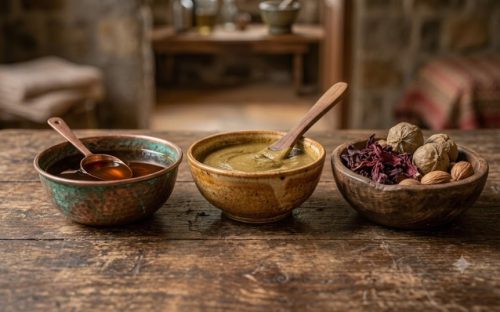
Many Ayurvedic hair oils are blends of herbs cooked in a base oil. The base matters as much as the herbs. Here is a short reading guide for the ingredient list.
- Amla: a traditional favourite for hair strength and shine
- Bhringraj: often called the “king of herbs” for hair in Ayurvedic texts
- Brahmi: used for scalp comfort and a calming massage
- Hibiscus: traditionally used for softness and shine
- Neem: used in oils for scalp cleanliness
Check the base too. Coconut and sesame suit dry hair. Lighter bases suit oily scalps. If your skin is sensitive, a short ingredient list without strong synthetic fragrance or artificial colour is safer.
Always patch test
Natural does not mean harmless. Put a small drop behind your ear or on your inner arm. Wait 24 hours. If you see redness, itching or swelling, do not use that oil on your scalp. The US FDA’s page on cosmetic product safety is a useful reference on reading and reporting reactions.
How to Apply Hair Oil the Right Way
- Section your hair so the oil reaches the scalp and not just the top layer.
- Warm the oil by placing the bottle in warm water for a few minutes. Never heat it directly or use a microwave.
- Massage with fingertips for five minutes. Use gentle, slow circles.
- Comb gently with a wide-tooth comb. Wet and oiled hair breaks easily.
- Leave for 30 minutes to a few hours. Overnight is optional, not required.
- Shampoo twice if needed, using mild bath and body products and lukewarm water.
How often? Dry hair can be oiled two to three times a week. Normal hair, once or twice. Oily scalps, once a week, or just on the lengths. Adjust your hair oil routine after two to three weeks based on how your hair feels.
Choosing Hair Oil When You Live Abroad
NRIs and travellers face extra puzzles. Your hair may behave differently after a move, and the oil that worked in Mumbai may not work in Manchester.
- Cold climates and indoor heating dry out hair and scalp. Richer oils and pre-wash oiling help.
- Hard water leaves minerals on hair. If your hair feels coated or dull, use lighter oil and rinse well.
- Humid places can make hair frizzy. A small amount of light oil on the ends can calm it.
- Long flights dry the scalp and ends. A few drops of oil on the lengths before travel helps.
- Stress and poor sleep affect hair too. For Ayurvedic routines that suit life abroad, see this Ayurveda guidance hub for NRIs.

Planning a trip home? Many NRIs add Ayurvedic care to their travel. Read this treatment in India guidance and the healthcare reality in India page to set realistic expectations. For a residential programme, Vajra Ayurveda Retreat in Kerala is listed on MorningSun.
When to See a Specialist
Oil cannot solve everything. See a doctor or trained practitioner if you notice:
- Sudden or patchy hair loss
- Thick, red, painful or scaly scalp patches
- Constant itching that does not settle
- Hair thinning along with tiredness, weight changes or missed periods
These can point to a medical cause. The Mayo Clinic’s overview of hair loss causes and symptoms explains the common reasons. If you want a whole-body Ayurvedic view alongside medical care, MorningSun lists trusted options under its Ayurveda for health conditions section and its Ayurveda wellness centres directory. You can also send an enquiry to MorningSun. For general questions on Ayurveda in India, you can contact the DeshSansaar team.

A Quick Checklist Before You Buy
- Do I know my scalp type and hair type?
- Is the base oil right for my hair? Rich for dry, light for oily.
- Is the ingredient list short and clear?
- Have I done a patch test?
- Am I ready to use it for 6 to 8 weeks before judging?
If you can say yes to all five, you are ready. Consistency beats switching oils every week.
Ready to match your hair type to the right bottle?
Conclusion
Choosing a hair oil gets easier once you know two things: your scalp type and your hair type. Match rich oils to dry hair, light oils to oily scalps, and test before you commit. Give any new oil six to eight weeks, use it on a steady schedule and watch how your hair responds. When you are ready to put this into practice, explore the Advik Ayurveda range and Find Your Perfect Hair Oil for your routine.
FAQs:
Check your scalp (oily, dry, normal) and hair texture first, then match oil weight: rich for dry, light for oily.
Coconut, sesame and almond oils are popular. Apply before washing to lock in moisture.
Light oils like jojoba or diluted neem blends work well. Use sparingly and wash within an hour.
No. Two to three times weekly suits most hair. Daily oiling can cause buildup, especially on oily scalps.
Yes. Patch test first, and pick richer oils for cold, dry climates or hard water areas.
Softness shows in a few washes. Judge scalp and hair health after six to eight weeks.
Leave a Reply