

Pimples are one of the most common skin concerns faced by people of all ages. Whether due to hormonal changes, excess oil production, or clogged pores, pimples can be frustrating and difficult to manage. While there are numerous treatments available, many individuals prefer natural remedies that are gentle on the skin. One such potent ingredient is haldi, also known as turmeric. Use of haldi for pimples has proven to be an effective traditional remedy.


Turmeric, or haldi, has been a staple in Indian households for centuries, not just for cooking but also for skincare. Its healing, anti-inflammatory, and antibacterial properties make it an excellent choice for treating pimples and acne. In this post, we will learn how haldi can be used to manage pimples, its benefits for the skin, and some easy DIY turmeric face masks to get started.
Recommended Product

Why Haldi is Effective for Pimples
Haldi’s effectiveness in treating pimples comes from its active compound curcumin. Curcumin possesses anti-inflammatory, antioxidant, and antibacterial properties, making it a powerful ingredient for soothing irritated skin, reducing pimple size, and preventing future breakouts. Here are some reasons why haldi is great for treating pimples:
- Anti-Inflammatory Properties
Inflammation is one of the leading causes of acne and pimples. Haldi’s anti-inflammatory properties reduce redness, swelling, and irritation associated with pimples. It calms the skin, making it less prone to breakouts. - Antibacterial and Antimicrobial Action
Bacteria on the skin can worsen pimples and lead to more acne. Haldi’s antibacterial and antimicrobial action kills acne-causing bacteria and keeps the skin clean, reducing the likelihood of future breakouts. - Oil Control
Excess oil production is another major factor contributing to pimples. Turmeric balances the skin’s oil production, ensuring the skin doesn’t become overly greasy, which can clog pores and cause pimples. - Healing Properties
Pimples can often leave scars and marks on the skin. Use of haldi for pimples is effective because it speeds up the healing process, promoting skin regeneration and fading pimple scars over time. Its antioxidant properties also protect the skin from damage caused by free radicals. - Exfoliation and Cleansing
Turmeric gently exfoliates the skin, removing dead skin cells and unclogging pores. This prevents the formation of blackheads and whiteheads, which are often precursors to pimples.

Recommended Product

How to Use Haldi for Pimples
There are several ways to incorporate haldi into your skincare routine to treat pimples. From simple masks to spot treatments, turmeric can be used in various forms depending on your skin’s needs. Here are some popular methods to use haldi for pimples:
1. Turmeric and Honey Face Mask
Honey is a natural humectant that retains moisture while being antibacterial. When combined with haldi, it creates a powerful anti-acne face mask that soothes and heals the skin.
Ingredients:
- 1 teaspoon of turmeric powder
- 1 tablespoon of raw honey
Instructions:
- Mix turmeric powder with raw honey to form a smooth paste.
- Apply the mixture to your face, focusing on areas with pimples.
- Leave it on for 15-20 minutes before rinsing with lukewarm water.
- Repeat this 2-3 times a week for best results.
2. Turmeric and Yogurt Mask
Yogurt contains lactic acid, which gently exfoliates the skin and improves its texture. Paired with haldi, this mask works wonders for reducing pimples and brightening the complexion.
Ingredients:
- 1 teaspoon of turmeric powder
- 1 tablespoon of plain yogurt
Instructions:
- Mix turmeric powder and yogurt to form a thick paste.
- Apply it evenly on your face and let it sit for 15 minutes.
- Rinse off with warm water and pat dry.
- Use this mask twice a week to reduce pimples and improve skin texture.
3. Turmeric Spot Treatment
For those dealing with a few stubborn pimples, turmeric can be used as a spot treatment to target specific areas of concern.
Ingredients:
- A pinch of turmeric powder
- A few drops of water or rose water
Instructions:
- Mix a small amount of turmeric powder with water or rose water to form a thick paste.
- Apply the paste directly onto the pimple.
- Leave it on for 20 minutes or overnight (if you’re comfortable) before rinsing it off.
- Repeat daily until the pimple subsides.

Recommended Product

4. Turmeric and Aloe Vera Gel
Aloe vera has soothing and anti-inflammatory properties, making it an excellent partner for haldi in treating pimples. This combination can calm irritated skin while reducing pimple size.
Ingredients:
- 1 teaspoon of turmeric powder
- 1 tablespoon of fresh aloe vera gel
Instructions:
- Mix turmeric with aloe vera gel to form a smooth paste.
- Apply the mixture to your face, focusing on pimple-prone areas.
- Leave it on for 15-20 minutes and rinse off with cool water.
- Use 2-3 times a week for clear and soothed skin.
5. Turmeric and Lemon Face Pack
Lemon juice, being rich in vitamin C, lightens acne scars and brightens the skin. Combined with haldi, it creates an effective mask for fighting pimples and reducing pigmentation.
Ingredients:
- 1 teaspoon of turmeric powder
- 1 teaspoon of lemon juice
Instructions:
- Mix turmeric with lemon juice to form a paste.
- Apply it to your face, avoiding sensitive areas like the eyes.
- Let it sit for 10-15 minutes before rinsing off with water.
- Use this mask once a week to treat pimples and improve skin tone.
Recommended Products

Precautions When Using Haldi for Pimples
While haldi is generally safe for most skin types, there are a few precautions to keep in mind:
- Do a Patch Test: Before using turmeric on your face, always perform a patch test to check for any allergic reactions or skin sensitivity.
- Avoid Staining: Turmeric has a yellow pigment that can temporarily stain the skin. To avoid staining, mix turmeric with ingredients like honey or yogurt and rinse thoroughly after use.
- Use Pure Turmeric: Ensure you’re using organic or pure turmeric powder without added dyes or chemicals, as these can irritate the skin.
- Don’t Overuse: Using turmeric excessively can cause dryness or irritation. Stick to using it 2-3 times a week for best results.
Our Recommendations
Advik Ayurveda Turmeric Face Wash: Turmeric Face Wash is infused with the natural power of turmeric to cleanse and brighten the skin. Its anti-inflammatory and antibacterial properties combat acne, reduce redness, and soothe irritation. Ideal for daily use, this face wash leaves your skin refreshed, radiant, and clear of impurities.

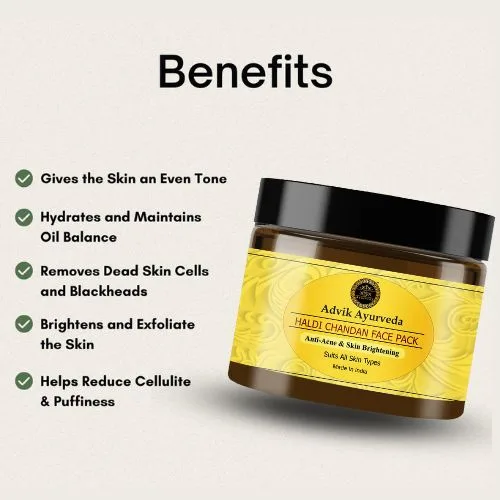
Advik Ayurveda Haldi Chandan Face Pack: Haldi Chandan Face Pack combines the goodness of turmeric (haldi) and sandalwood (chandan) to revitalize the skin. This natural blend reduces acne, brightens the complexion, and soothes irritation. It deeply cleanses, nourishes, and leaves the skin feeling soft, radiant, and refreshed with every use. Perfect for glowing skin!

Final Remarks
Haldi, or turmeric, is a powerful natural remedy for pimples, offering numerous skin benefits without the harsh side effects of chemical treatments. Its anti-inflammatory, antibacterial, and healing properties make it an effective option for reducing acne, soothing irritation, and promoting clear, radiant skin. Incorporating haldi for pimples or usual skincare in your routine through masks, spot treatments, or face packs can lead to visible improvements in your skin’s health and appearance.
For those seeking a gentle yet effective solution to pimples, haldi could be the answer. Consistency and proper usage will reap the full benefits of this golden spice for healthy, pimple-free skin.
Related Product

FAQs
1. How effective is using turmeric or haldi for pimples?
Haldi contains curcumin, an active compound with anti-inflammatory, antibacterial, and antioxidant properties. It reduces redness, swelling, and irritation caused by pimples while also fighting acne-causing bacteria and promoting faster healing of breakouts.
2. Can I apply turmeric directly to my pimples?
Yes, you can apply a small amount of turmeric mixed with water, rose water, or aloe vera as a spot treatment directly onto pimples. Leave it on for 20 minutes or overnight, and rinse it off with water.
3. Does turmeric stain the skin when used for pimples?
Turmeric can leave a temporary yellow stain on the skin, especially when used in higher concentrations. To reduce staining, mix turmeric with other ingredients like honey or yogurt, and ensure thorough rinsing.
4. How often should I use turmeric for treating pimples?
It’s best to use turmeric masks or spot treatments 2-3 times a week. Overusing haldi for pimples or otherwise may cause dryness or irritation, so moderation is key.
5. Is turmeric suitable for all skin types?
Turmeric is generally suitable for most skin types, but people with sensitive skin should perform a patch test first. If you experience irritation, discontinue use or dilute the turmeric with soothing ingredients like honey or aloe vera.
6. Can turmeric help with acne scars?
Yes, turmeric’s antioxidant and anti-inflammatory properties promote skin regeneration and fade acne scars over time. Regular use can improve overall skin tone and texture.
7. Is turmeric effective for oily skin and pimples?
Yes, turmeric controls excess oil production, which is a major contributor to pimples in oily skin. Its antibacterial properties also keep pores clear, preventing further breakouts.
8. Can I mix turmeric with other ingredients for pimples?
Absolutely! Common ingredients to mix with turmeric for pimples include honey, yogurt, aloe vera, and lemon juice. These enhance turmeric’s effectiveness while providing additional skin benefits like hydration and brightening.
9. How long does it take to see results using haldi for pimples?
You may start seeing improvements in pimple size and redness within a few days to a week of regular use. Consistent use over several weeks can result in clearer skin and fewer breakouts.
10. Are there any side effects of using turmeric for pimples?
Turmeric is generally safe, but some people may experience mild irritation or dryness, especially with overuse. Always perform a patch test and avoid using too much turmeric to prevent adverse effects.
Leave a Reply