

You pick up a face cream in the store. The front says “natural,” “gentle,” and “dermatologist tested.” You turn the jar around and see thirty long names you cannot pronounce. Most of us shrug, buy it, and hope for the best.
That small moment is exactly why it pays to know the toxic ingredients in skincare labels. Your skin is a good barrier, but it is not a wall. What you apply every morning and night, for years, can add up.
This guide keeps it simple. You will learn how to read skincare labels step by step, which harmful chemicals in cosmetics deserve a second look, and how to pick cleaner products. It works whether you shop in Delhi, Dubai, or Dallas. No scare tactics, just clear habits you can use today.
Why Skincare Labels Deserve Your Attention
Think about how much product touches your skin in a day. Cleanser, moisturiser, sunscreen, deodorant, body lotion, lip balm. Many of these are leave-on products. They sit on your skin for hours, so the ingredients matter more than most people think.
Let us be fair, though. The word “toxic” is not black and white. Most ingredients are safe at the levels regulators allow. Problems tend to come from three things: the dose, how often you use a product, and your own skin. An ingredient that is fine for one person can cause redness, itching, or breakouts for another.
There is a second issue, and that is confusing marketing. Words like “natural,” “herbal,” and “chemical-free” sound safe, but they have no strict meaning on most labels. Water is a chemical too. This is why the clean beauty India market is growing fast, and why shoppers need a way to cut through the noise.
In India, cosmetics come under the Drugs and Cosmetics Act and the Cosmetics Rules, 2020, which are overseen by the Central Drugs Standard Control Organisation (CDSCO). These rules set a base level of safety. They cannot read the label for you. That part is up to you.
How to Read Skincare Labels in 5 Simple Steps

You do not need a chemistry degree. You need a routine. Follow these five steps every time you pick up a new product.
Step 1: Flip the Pack and Ignore the Front
The front is advertising. The back holds the facts. Look for a full ingredient list, usually under the heading “Ingredients” or “INCI.” If a product has no ingredient list at all, put it back. That alone is a red flag.
Step 2: Know the Order Rule
Ingredients are usually listed from the highest amount to the lowest. Under common rules, anything above 1 percent follows that order. Anything below 1 percent can appear in any order. So the first five ingredients make up most of the product. If water, a gentle oil, and a plant butter lead the list, that is a good sign. If a harsh ingredient sits near the top, think twice.
Step 3: Decode the INCI Names
INCI stands for International Nomenclature of Cosmetic Ingredients. It is a global naming system, so the same ingredient has the same name in India, the US, or the UK. Plants are written in Latin, such as Azadirachta Indica for neem or Curcuma Longa for turmeric. Chemical names look scarier, but a long name does not mean a bad ingredient. You can look up any name in the European Commission’s CosIng ingredient database to see what it does.
Step 4: Be Careful With the Word “Fragrance”
Fragrance, or parfum, is a single word that can hide dozens of separate compounds. Brands do not have to list each one. If you have sensitive skin, look for products that say fragrance-free. Remember that essential oils can cause allergies too, so a “natural scent” is not a free pass.
Step 5: Check the Small Print
Look for the maker’s name and address, a batch number, the manufacturing date, and the expiry date. Many products also show a small open-jar symbol. It tells you how many months the product stays good after opening. A complete label shows a brand that takes responsibility. For more on how labels work, read the US FDA’s guide to cosmetic ingredient labeling.
Ready to put this into practice?
Check the labels on the Advik Ayurveda skin care range and Switch to Toxin-Free Skincare at your own pace.
Harmful Chemicals in Cosmetics: 7 Ingredients to Look at Twice
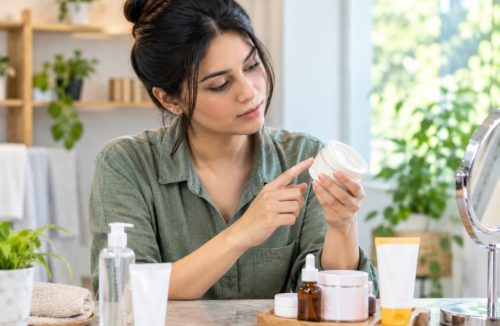
This is a watch list, not a ban list. Some of these ingredients are legal and widely used. The goal is to know what they are, so you can choose with your eyes open.
1. Parabens
Parabens are preservatives that stop bacteria and mould from growing. On labels, they end in “paraben,” such as methylparaben or propylparaben. Regulators say there is no proof that parabens at current use levels harm health, and you can read the US FDA’s position on parabens. Still, some studies have looked at their hormone-like activity, and many people with sensitive skin choose to avoid them. If you want to skip them, just look for the “-paraben” ending.
2. Formaldehyde Releasers
Formaldehyde is a known irritant and is classed as a human carcinogen by the International Agency for Research on Cancer. Some preservatives release tiny amounts of it over time. Look for DMDM hydantoin, quaternium-15, imidazolidinyl urea, and diazolidinyl urea. They can trigger contact allergy in some people, which shows up as itchy, red, or flaky skin.
3. Phthalates
Phthalates help fragrance last longer and make products feel softer. Some types have raised hormone-related questions in research, and the FDA explains what is known about phthalates. They rarely appear by name, since they often hide inside “fragrance.” If you see diethyl phthalate (DEP) or dibutyl phthalate (DBP) listed, take note. Choosing fragrance-free products is the easiest way to avoid them.
4. Synthetic Fragrance
Fragrance is one of the most common causes of cosmetic allergy. Symptoms include redness, burning, and rashes. If your skin reacts often, remove scented products first and give your skin a few weeks to settle. You may be surprised by how much calmer it looks.
5. Sulfates (SLS and SLES)
Sodium lauryl sulfate and sodium laureth sulfate create foam in face washes, shampoos, and body washes. They are not toxic for everyone. But they can strip natural oils and irritate dry or sensitive skin. If your skin or scalp feels tight after washing, a milder cleanser may help. You can explore gentler options in these ayurvedic hair care products.
6. Triclosan and Harsh Antibacterials
Triclosan was once common in antibacterial soaps. The US FDA removed it from over-the-counter antibacterial hand and body washes because makers could not show it was safe and better than plain soap. For daily use, plain soap and water work well.
7. Oxybenzone in Sunscreens
Oxybenzone is a chemical sunscreen filter. Studies have found it can enter the bloodstream, and scientists are still studying what that means. It is also a concern for coral reefs. Please do not skip sunscreen because of this. Sun damage is a proven risk. If you want another option, look for mineral sunscreens made with zinc oxide or titanium dioxide.
Cleaner choices do not have to be complicated.
Red Flags That Matter More Than Any Single Ingredient
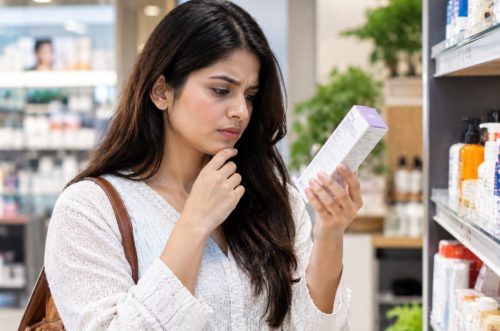
Sometimes the bigger problem is not one ingredient. It is the whole product. Watch for these signs:
- Mercury on the label. In skin-lightening creams, look for mercury, mercurous chloride, or calomel. Mercury in cosmetics is restricted under the Minamata Convention, and the World Health Organization warns it can harm the kidneys and nervous system.
- Miracle claims. A cream that promises to erase dark spots in three days may hide steroids or bleaching agents. Some unregulated lightening creams have been found to contain them.
- Missing basics. No batch number, no maker’s address, or no expiry date.
- A harsh smell or sting. A very strong smell, or a sharp burn the moment you apply it, is your skin saying no.
- “Ayurvedic” with no ingredient list. Tradition is valuable, but it is not a substitute for transparency.
If you notice a reaction, stop using the product and see a dermatologist.
Clean Beauty India: What the Label Words Really Mean
Clean beauty in India is a fast-growing space, and the words on the front can be slippery. Here is a quick decoder.
- Natural: Usually means some ingredients come from plants or minerals. It does not promise the whole product is plant-based.
- Organic: Only means something when a recognised certification is shown. Look for the certificate, not just the word.
- Herbal or Ayurvedic: Points to traditional plant-based formulas. Check the list to see which herbs are really inside.
- Chemical-free: A marketing phrase. Everything, including water, is made of chemicals.
- Dermatologist tested: Means a test took place. It does not tell you the result.
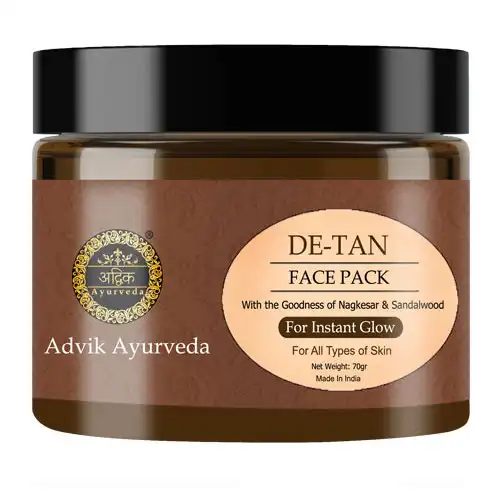
Also remember that natural does not always mean gentle. Cold-pressed lemon oil can make skin burn in the sun. Some essential oils trigger allergies. Always patch test.
Ayurveda sees skin as a mirror of overall health, which is why many people explore it beyond creams. If that interests you, DeshSansaar’s Ayurveda guidance pages explain the basics in plain language. And if you want to look at professional care, MorningSun lists Ayurveda wellness centres you can compare. For more reading on whole-body care, browse the health and healing articles on DeshSansaar.
A Simple Guide for NRIs and Global Buyers
If you live abroad and buy Indian skincare, the label matters even more. Rules differ from country to country, and an ingredient allowed in one market may be limited in another. So always check the box you receive, not just the website.
- Buy from the brand’s official site or an authorised seller.
- Check that the INCI list is printed in English.
- Look for the batch number and expiry date on the pack.
- Check your country’s customs rules before ordering in bulk.
- Patch test, because climate changes how skin reacts. Dry winter air in Canada is very different from humid Chennai.
Interest in Indian wellness is growing worldwide, as DeshSansaar explains in its piece on the popularity of Ayurveda in the West. If you plan a trip home, you can pair skincare with deeper care too. MorningSun’s page on anti-ageing and longevity care shows what is available.
Build a Toxin-Free Skincare Routine Without Stress
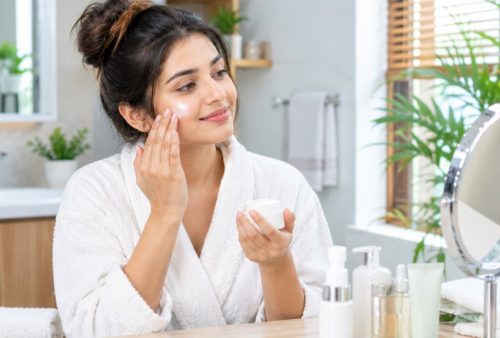
You do not have to throw everything away today. That is expensive and unnecessary. Go step by step. Small daily habits count for more than big one-time changes, and DeshSansaar’s daily care support pages show how to build them into a normal day.
Start With What Stays on Longest
Leave-on products like moisturiser, serum, and sunscreen touch your skin for hours. Read these labels first. Rinse-off products like face wash come second.
Swap One Product at a Time
Replace each product when it runs out. This way, you can see how your skin reacts to every change. If you change everything at once, you will not know what helped or what caused a reaction.
Patch Test Every New Product
Put a small amount on your inner forearm or behind your ear. Wait 24 to 48 hours. If you see redness, itching, or swelling, do not use it on your face.
Keep the Routine Short
Four basics work for most people: a cleanser, a moisturiser, a sunscreen, and a night treatment if needed. Fewer products mean fewer ingredients and fewer chances of a reaction.
Your body deserves the same care as your face. Soaps and body washes cover a large area of skin every day, so read those labels too. You can compare options in this collection of ayurvedic bath and body products.
Soaps, scrubs, and body lotions need a label check as well.
Explore the Advik Ayurveda bath and body range and Switch to Toxin-Free Skincare from head to toe.
Quick Label Checklist You Can Save
Keep this on your phone and run through it in the store.
- Is there a full ingredient list in English?
- Do you know, or can you look up, the first five ingredients?
- Does it say fragrance or parfum? If your skin is sensitive, skip it.
- Are there parabens, formaldehyde releasers, or phthalates you want to avoid?
- Are the batch number, dates, and maker’s address printed?
- Does it make miracle claims?
- Have you patch tested it?
Conclusion
Spotting toxic ingredients in skincare labels is a skill, and you build it one label at a time. Start with the back of the pack, learn the order rule, and watch for the red flags in this guide. Stay calm, too. Most products on the shelf are safe, and the goal is simply to choose with more knowledge. For more skin and body guides, visit the Advik Ayurveda blog.
When you are ready to take the first step?
FAQs:
Common watch-list items include parabens, formaldehyde releasers, phthalates, synthetic fragrance, triclosan, and mercury in lightening creams.
Flip the pack, read the first five ingredients, check for fragrance, and confirm the batch number and expiry date.
No. Natural has no strict meaning. Plant ingredients can still cause allergies, so always read the list and patch test.
Cosmetics fall under India’s Cosmetics Rules, 2020, but “clean” is a marketing term, so check ingredient lists yourself.
Regulators say current levels are safe, but some people prefer avoiding them, especially with sensitive skin.
Apply a little on your inner forearm, wait 24 to 48 hours, and watch for redness or itching.
Yes. Buy from official sellers, check English INCI lists, and confirm batch numbers and expiry dates on arrival.
Leave a Reply